
I was interviewed for this piece in the Independent yesterday. The UK’s education ‘behaviour Tsar’ Tom Bennett had told the Sunday Times that parents were to blame for current behaviour issues at school, specifically parents who were scared to discipline their children. This then resulted in an inevitable attack on gentle parenting, with many – including professionals – claiming that it was the cause of all problems in society today.
I am getting so tired of this wilful misinterpration of gentle parenting. If you’re reading this you know that it involves discipline, boundaries, consequences (albeit not illogical ones like time out, naughty steps, or exclusions and isolations) and saying “no” to children. It just does this with empathy and understanding of the neurological and developmental cabilities of children in mind. We also know that you can’t demand respect, you have to earn it. The style of gentle parenting I speak about is not at all permissive and I don’t recognise it in the parenting styles the experts in this piece attack. I think that’s because the loudest gentle parenting critics are usually arguing against a caricature of it.
Today’s piece isn’t new. There’s always a social media post, newspaper article, radio segment or TV chat about gentle parenting and it always goes the same way; “parents need to parent and not be their child’s friend” blah, blah, blah. Invariably when I have a moan somebody says “the problem is the name gentle”. They tell me it should be called something more authorative. What they really mean, is it needs to be something less soft sounding; more ‘manly’.

The word “gentle” seems to stick in people’s throats. It carries connotations that go far beyond parenting. Gentle is soft. Gentle is feminine. Gentle is not something that belongs in a patriarchical society where grit, strength, capability, independence and resilience is so prized, especailly in children. When it comes to raising boys, gentle is, for many people, the opposite of what a boy needs if he is to grow into a capable man. This is where the issue becomes less about parenting techniques and more about how we understand masculinity.
Boys today are raised to be strong and stoic. To be “a proper man”. Crying is for wusses, emotions are for girls (or gays – there is a strong link between misogyny and homophobia). If a boy falls over in the playground and starts to cry he’s often told to “be a brave soldier”. If a parent tries to talk through a difficult moment calmly with their son, another adult mutters that the boy just needs a firmer hand. These everyday moments reinforce the same idea again and again. Boys should be toughened up, not handled gently. Gentle boys are not wanted in society today. Gentle boys threaten masculinity, especially for older generations.
As previously mentioned, there is also an uncomfortable link between softness in boys and assumptions made about sexuality. Boys who are more sensitive, more expressive, or less interested in stereotypical “masculine” activities often find themselves teased or labelled with reference to their sexuality and identity. “That’s so gay!” is sadly a really common phrase uttered in playgrounds and amongst teens today. It is rooted in both sexism and homophobia, the intersectionality between the two strong.

The irony is that if you removed the word “gentle” and replaced it with something that sounds more traditionally masculine, the resistance fades significantly. Call it “positive parenting” or “sturdy parenting”, and many say that it sounds sensible, even though it’s exactly the same thing as gentle parenting. The approach has not changed at all. The only thing that has changed is the language, and with it, the set of assumptions people bring to it. What is being rejected, with the constant attack on gentle parenting, is not the method itself, but its association with femininity.
It’s impossible to separate the current gentle parenting backlash from a broader strain of misogyny. Parenting styles that centre empathy, patience, nurturance and emotional awareness are often dismissed precisely because those qualities have historically been linked to women and are therefore grossly undervalued. When commentators warn that mothers are being too soft, or that homes lack authority because of these approaches, there is an undercurrent of suspicion towards anything that feels maternal or nurturing. In that sense, the current criticism of gentle parenting is not just about children, it is about how caring and mothering is seen by society.
For boys in particular, the consequences of this cultural tug of war are damaging. If they absorb the message that gentleness is not for them, they learn early on to push certain parts of themselves out of view. A ten year old who is told not to cry does not suddenly stop feeling upset. He simply learns that those feelings are not welcome. Over time, that can make it harder for him to understand his own emotions, let alone express them and what happens to boys who bury their emotions early on? Especially ones who are raised to believe that feminity is worth less than masculinity? It doesn’t take a rocket scientist to see the links with the current manosphere and incel movement concerns.
All of this leaves parents in a difficult position. You want your son to be able to cope with the world, to stand up for himself, and to be resilient in the face of setbacks. At the same time, you want him to be kind, to understand his feelings, and to treat other people with care. The public conversation often frames these as opposites, as though you have to choose between raising a strong boy and a gentle one. In reality, those qualities tend to support each other. Teaching a boy to be gentle does not make him fragile though. It gives him tools that many men later wish they had been allowed to develop.
Anyway, all of this is why I will never stop calling my work “gentle parenting”. I refuse to bow down to the patriarchy. To me, gentleness is strength. Gentleness is important for girls and for boys. The latter especially need a lot more of it than they receive currently. So, I make no apologies for the name and I will not change it. Gentle is not weak and the use of the term is not problematic, it is the deeply entrenched patriarchal culture that we live in that needs to change. I hope you’ll join me in using the name with pride.
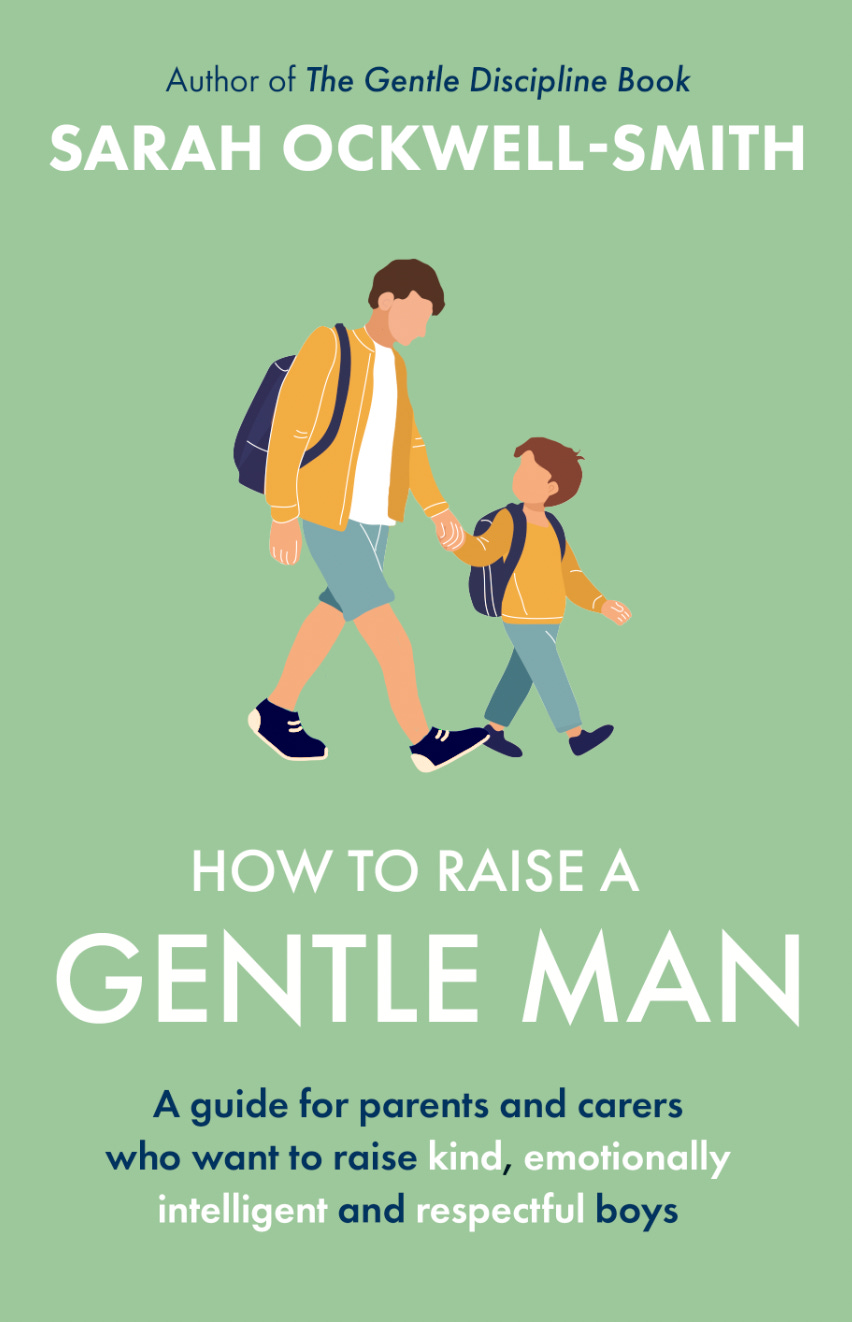
My book ‘How to Raise a Gentle Man’ is out tomorrow, if you’re raising a boy it explores all of these issues in depth and sets out a road map for how to raise a boy with gentleness in a world that often feel ungentle.
You can find stockist information HERE.
Sarah xx

