Help – My 4-5 Month Old Is Sleeping Like a Newborn Again (AKA ‘The 4-5 month old babies from hell’)

If you asked me what point of parenting I found the hardest (excluding tweenhood, because that’s a WHOLE other ball game, whoah have you got fun to come!) it would have to be 4 and 5 months. I’ve always found the newborn period pretty easy, I think in part to the hideous morning sickness, PGP and insomnia I experience during pregnancy meaning that even 3hrs of broken sleep at night is an improvement on my pregnancy sleep, plus you get lots of lovely warm squishy cuddles and an immobile baby who’s content with his or her world revolving around your chest not needing anything else. I enjoy toddlerdom too I love that willful curiosity and the real emergence of personality (despite the sudocrem smeared on the sofas, unrolling of toilet roll and emptying of baby wipe packets that occurs on an almost daily basis), but oh 4-5 months that is a period I **HATE** with a passion (yes I did say that, me the supposed ‘baby expert’, I willingly confess to hating being a mother to a 4 or 5 month old baby!). It is, without a doubt, the hardest stage of parenting a baby or toddler and I have struggled with each of my four children.

So what happens at 4 and 5 months? You’ve just settled into a routine, both day and night. Your little one may be sleeping stretches of 4 or 5 hours at night (or if you’re lucky, even longer!), you’ve got some semblance of normality back in the daytime too. Your house may be resurfacing from the bomb site it became during the newborn days when you didn’t have the time or energy to even plug the hoover in (unless it was used as white noise to get the baby to sleep!), you’ve started to eat better, maybe exercise a little too, heck you may even have started to brush your hair and put on lipstick, yep – you’ve got this parenting thing sorted, you’re emerging from the fog of the fourth trimester and you’re feeling good (particularly when it comes to your little one’s sleep!) ………and then it happens…………..your baby doesn’t sleep, that smile that you’ve come to love, it doesn’t happen very often now, your baby is always grouchy and unsettled, they cry to be picked up constantly (much more than they did as a newborn) but when you pick them up they’re not happy and squirm around on your lap. What the hell went wrong?! To add to this their dribble is akin to Niagara falls and they ram everything they touch into their mouth, teething? Surely not (the answer is probably not by the way!).

….and you know what’s worse? You’re not special anymore. The interest in your baby has waned now they’re not a newborn anymore, the congratulations cards have long since been taken down, the petals on the flowers relegated to the compost heap, the visitors have stopped coming which is a good job really as they only comment about teething and “you really should be giving her proper food by now, you need to wean, that’s why she’s not sleeping”. The midwives have long since discharged you from their care and you only see the health visitor (who tells you that you’re making a rod for your own back and that you need to sleep train using controlled crying/CIO and *never* let your baby fall asleep in your arms) if you go to baby clinic. No, mothers of 4 or 5 month old babies are not special, they are ‘old hands’ and expected to get on with it without the help that was offered in the newborn period.

So, why are 4 and 5 month old babies such hard work? Developmentally so much is happening. I always used to look at my babies at that age and feel so sorry for them, they were so much more alert, understanding so much of the world now, but their bodies were still effectively pretty useless, they couldn’t sit unaided, couldn’t crawl, couldn’t stand – “the mind is willing but the body is weak” was a phrase that came to mind, imagine the sheer frustration! It may be hard parenting a 4 or 5 month old, but imagine how hard it is to BE a 4 or 5 month old?!

So much happens developmentally at 4 or 5 months, physically babies become so much stronger and more able to do things such as grasp and move their body with purpose and their hand-eye coordination really picks up a gear. The world takes on a whole new sensory quality as their vision and sensory processing matures. One of the most sensory areas of a baby’s body is their mouth – which is why *everything* gets put in there and why many mistakenly think their baby is ready for weaning and/or teething, babies put keys in their mouth, does it mean they want to eat them? The ‘putting everything in their mouth’ stage is a normal developmental one. I’m not saying your baby isn’t teething, they may well be, but the constant putting things in their mouth isn’t a sign, neither is it necessarily a sign of readiness for weaning. At this stage babies become so much more aware of their surroundings and that includes recognising people (and the opposite! ever wondered why your newborn was happy to be passed around to complete strangers as a baby, but now isn’t happy with anyone apart from you?). Language acquisition really kicks in too with the emergence of babbling. All this in just a few short weeks, imagine how exhausting and confusing that must be for your baby.

I always liken the 4-5mth experience for a baby as akin to you emigrating to Africa. Imagine moving somewhere with an entirely different climate, a different language and different food – in fact *everything* is different. It would freak you out wouldn’t it? All this change, all at once. How might it affect you? Well you might want to cling to those you love or those things that remind you of home, you’d probably be pretty cranky in this new overwhelming world of change and your sleep is probably most likely to be seriously affected – with all these thoughts running through your mind it would be mighty hard to switch off, especially when you do finally get to sleep and then wake up in strange surroundings only two hours later. Just for 5 minutes try to imagine how your baby is feeling with all of these changes, imagine how overwhelmed he is – now – should you listen to your mother in law or health visitor and start weaning him, introducing yet something else new into his life? Or should you start sleep training? Leaving him to cry by himself when what he really needs is you to help comfort him and be his ‘constant’. The key really is to CHANGE NOTHING. This too will pass.

The secret to surviving the 4 to 5 month old babies from hell? Well that secret is you. It’s what *you* do during these long 8 weeks, what support will you have? Who will you ask to help you? Who will you ask to support you whilst you are busy being there for your baby? How will you put as much of your life on hold for the next few short weeks whilst you help your baby to navigate this critical period of their development? What steps will you take to help you to cope with the transient sleepless nights?

This stage WILL pass, I promise, six month old babies are a dream, the fun of weaning, the babbling, the real emergence of personality, the ability to sit upright unaided and amuse themselves for more than 10 seconds and SLEEP…….sweet, sweet sleep…(I’m not talking ‘sleeping through the night’ here by the way, that’s pretty unusual for any child under 2 years old…I’m talking no more waking every 2hourly!). THIS TOO WILL PASS.

The NEWLY UPDATED Gentle Sleep Book – out now! If you would like to understand and learn how to improve your baby, toddler, or pre-schooler’s sleep WITHOUT cry-based conventional sleep training, this is the book for you!
sleepbook-1

Sarah

p.s: Come and chat with me on FacebookTwitter and Instagram 

Or watch my videos on YouTube

You can also sign up for my free parenting newsletter HERE.

Taming Toddler Tantrums? It’s Common SENSE!

I do love an acronym and this one came to me in my (almost) sleep last night, as do most of my writing ideas (frustratingly!). So I’d like to introduce you to my super easy to use common SENSE (© Ockwell-Smith 2013!) acronym for coping with toddler tantrums, whatever their cause, wherever you are.  I hope it helps.

Safety

If your toddler has a tantrum, hits, bites or throws the most important thing to think about is safety – their own safety, your own and those around you. Before you do anything else make sure that your toddler is not in immediate danger (away from a busy road etc..) and is not likely to hurt anybody around them (this could mean moving away from others/objects).

Empathy

Once you have dealt with the immediate safety issues it’s time to empathise with your toddler. WHY are they having these big emotions that they can’t control? What has triggered them? How are they feeling? (usually pretty awful, scared and out of control) – try to understand what is upsetting your toddler and let them know that you are hearing them. Remember they are not acting this way to give you are hard time, they are having a hard time!

Name

Help your toddler to understand what they are feeling by naming their emotions, this will help with the empathy point above and will also help your toddler to learn to understand their emotions and hopefully progress towards verbally communicating their needs as they develop a little more. “I can see you are very angry that the little boy took your toy from you”, “You are sad that it is time for us to leave the park and go home”, “You were scared when the girl ran over and grabbed your hand” and so on.

Support

Your toddler is not yet capable of emotional self regulation, they generate lots of big feelings, yet their brain is not yet sufficiently mature enough to diffuse them, they need your help for that! Most mainstream toddler taming methods, such as the naughty step and time out, mistakenly believe that a toddler has the brain development necessary for emotional self regulation and reflection – they don’t. At best these methods work as a form of conditioning and ‘learned helplessness’ (i.e: the behaviour is eventually – usually temporarily – extinguished because the toddler learns that there is no point in crying, all that will happen is they are left on the step alone, without their needs met).

Drawing on the empathy point above it is your job as a adult, to step in and offer your more mature capabilities of emotional regulation and soothing to help your toddler to calm down. Think of a toddler having a tantrum like a pot of water boiling over with nobody available to turn the gas off. Your role here is too turn the gas off and mop up the ‘mess’ (the tears and stress)  when the water stops boiling over.

Some toddlers will appreciate a big hug, others need their space initially – but offer your help “I can see you are having lots of big feeling, I’m here for you when you need me, please let me know if you’d like a hug”. Be ready to support with listening ears and open arms (and forgiving heart) when your toddler is ready.

Exchange

Exchanging is all about offering alternatives that are more acceptable to you (and society). Offer your toddler a more acceptable choice, exchanging the unacceptable for the acceptable “I can see you want to play with water, we can in the sink instead of pouring water on the floor”, “I know you’re hungry, we can’t eat food in the supermarket before we’ve paid for it, so I can’t let you eat the bread, but I have a banana in my bag for you”. “We don’t bite people, it hurts, but you can bite this teething toy instead”, “We don’t hit people, it hurts, but you can hit your special angry cushion” and so on.

I can’t promise these 5 simple tips will work *instant* magic, but they will have a positive effect in the long term, you will find tantrums easier to deal with and in time they will lessen too.

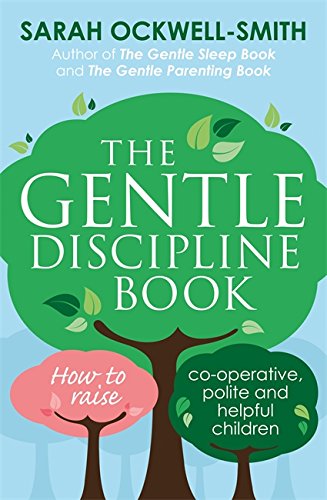
If you enjoyed this article you can read more discipline tips in my Gentle Discipline book, available HERE in the UK, HERE in the USA, HERE in Canada and HERE rest of the world.

gdbgentlediscipline

Sarah

p.s: Come and chat with me on FacebookTwitter and Instagram You can also sign up for my free weekly parenting newsletter HERE.

Bedsharing & SIDS – Why We Have it All Wrong

So today Carpenter et al published a horribly unreliable and flawed analysis of bedsharing. This scaremongering piece of ‘science’ (I use that term loosely) does not add to public understanding of the safety of bedsharing – far from it, it shrouds it in more myth and mystery and, in my opinion, is incredibly dangerous.

Why dangerous you ask? Their bold statement that bedsharing is 5 times more dangerous than a baby sleeping in it’s own sleep space may be incorrect (more later), but worse than being incorrect it is a claim that will doubtless scare thousands of tired and highly vulnerable new parents around the world. Those very parents who through sheer exhaustion are liable to fall asleep on a sofa with their baby, or in bed at night after a long night feed, babe in arms surrounded by fluffy pillows and cushions, perhaps their systems full of the opiate based analgesic they are still taken to recover from their C-Section. Two highly dangerous sleeping arrangements I’m sure you’ll agree? Two highly dangerous sleeping arrangements that COULD HAVE BEEN AVOIDED if they had known the REAL risks of bedsharing and how to minimise them.

You see the Carpenter research has many flaws, aside from the damaging call to action they propose they have just missed far too many variables for the research to be considered of any use to society. These missing variables are:

Now publishing research, and even worse – public health advice, based on missing variables is not only stupid, it’s dangerous.

Consider this scenario:

LATEST NEWS: RESEARCH SAYS DRIVING CARS IS DANGEROUS – NEVER DO IT!!!

Today, new research just in says that driving cars is so dangerous that you should never do it, so many people are likely to die in car accidents that today’s information strongly suggests that all humans should be told cars are deadly and they should stop sitting in them immediately. We have looked at things that make driving supposedly safer, like making sure your car is in good condition, not drinking and driving and passing your driving test, so we can assure this this information is valid.

Imagine if this ‘research’ forgot a few points, say:

  • The effect of prescription medication that makes you drowsy
  • The effect of driving when you are overly tired
  • The effect of driving for hours on end without a break
  • The effect of driving whilst talking on a mobile phone
  • The effect of driving without your glasses if you wear them
  • The effect of driving well into your pensioner years with failing eyesight and reactions

Now clearly this research into car safety would need to be discounted – there are just too many, vital, safety variables they didn’t include (because previous research didn’t study them). In fact if research like this came out there would be a public outcry “This is STUPID – what on earth are they talking about?”

Get where I’m going? Hey, I don’t want to be rude and call Carpenter et al. stupid, but hmmmmm you’ve gotta wonder what they were thinking when they sent out their press release to the world’s media. I’m only a Psychology undergrad and even *I* can see the mega holes in their research – peer review you say? Hmmmmmmmm

The REAL Way Forward.

Just in my driving example above – the REAL key is INFORMATION, information, information…..inform people of the risks, the benefits and importantly how to minimise those risks. Just as in the driving example if we’re taking prescription meds the PIL says “do not drive or operate heavy machinery whilst taking this medication” – they need to add “do not share a bed with an infant”. Cigarette packets need to feature information “If you smoke in pregnancy and/or afterwards it is highly dangerous for you sleep with your infant” and so on.

Currently ‘the powers that be’ are not getting this important information out. The fact of the matter is parents will ALWAYS sleep with their babies (indeed research estimates that 60-80% will do so at least once!), this sort of research and message is NOT going to stop that – but (and it’s a big but) what it will do is stop them from understanding how to do so with as little risk to the infant as possible.

In my opinion it is vital that we stop this circular science and instead focus on how to help those parents who still wish to share a bed with their baby and to educate those who may do so accidentally.

THIS is a good starting point.

The NEWLY UPDATED Gentle Sleep Book – out now! If you would like to understand and learn how to improve your baby, toddler, or pre-schooler’s sleep WITHOUT cry-based conventional sleep training, this is the book for you!
sleepbook-1

Sarah

p.s: Come and chat with me on FacebookTwitter and Instagram 

Or watch my videos on YouTube

You can also sign up for my free parenting newsletter HERE.

How to Heal from a Traumatic Birth & Bond with Your Baby

Bonding issues are so common but so rarely discussed in our society, there is such a stigma attached to a new mother who isn’t head over heels in love with her newborn. Commonly these feelings appear after a traumatic birth experience and it is with this in mind that I am writing this post. The following are a list of things that have helped some of the parents I have worked with, as well as myself – I have no scientific evidence to share here – only anecdote, but I hope it will help:

Talk, talk, talk……and then talk some more

Nobody wanted to listen to me, I was met with so many “but at least he’s here safely, that’s all that matters” – I felt so selfish wanting to yell “no – it’s not all that matters, what about me?”, so I never said it, but I’ve encouraged many to say the same to me. Birth matters. It is not “just one day in your life”, it will shape your personality forever more, if it goes well it can change your life, if it goes bad it can drag you down for months and even years. Find somebody you can talk to – preferably in person such as a birth afterthoughts counsellor, if not over the telephone rather than the internet, though if the internet is the only option go for it! at first it will hurt – a lot, you’ll cry, you’ll feel sad, you’ll feel angry, you may even feel worse for talking about it, but after a while  I promise it will get easier and will really begin to help. It’s also *really* important to talk to your partner about the birth, he may be harbouring feelings preventing him from bonding  too!

Write out your birth story

We tend to only write our birth stories if they are positive, but it’s so much more important to write out a negative one, you don’t have to show it to anyone, sometimes it can be hugely cathartic to write it out then tear it up  – even burn it.

Re-create your perfect birth (aka re-birthing)

I find this works really well for homebirth transfers and emergency C-Sections. For instance I once helped a couple who had planned a home waterbirth which resulted in an emergency section to create positive memories and enjoy the environment they so wanted. A week after the birth we set up the birthing room again, it was evening, dim light, we turned up the heating so it was snugly warm, got out the birth pool and filled it with warm water. We burned lavender and clary sage oil, we lit candles, we drank wine, we ate fruit, we played soft music. The mother entered the pool – closed her eyes and floated for a while whilst dad undressed the baby. The baby was then gently lowered on the mum’s tummy (head out of the water!) and then we sat back – quiet and a beautiful scene unfolded. The baby breastcrawled up and attached onto mum’s breast (hence why this is a technique often recommended for latching problems after C-Sections) and as she did the mum sobbed and sobbed and sobbed – a week’s worth of tears. They stayed there for an hour before retreating to bed together – skin to skin – for the night. It will never replace the birth she lost and so wanted but now she has good memories too.

Skin to skin

This one naturally goes without saying – or does it?

In my BabyCalm classes I always start off with asking the mums to undress their babies, hold them tight and close their eyes – then to feel every last inch of their baby, knowing them through their touch. I remember the most profound effect I witnessed – a mum with a four week old, her second child, who started crying within a minute of doing this. She had been so rushed with her toddler and putting the baby in a sling to get out and about, putting the baby down so the toddler didn’t get jealous and so on she hadn’t had time to get to know her newborn – even though she had a “perfect” homebirth. She said this was the first time she had really touched her. Co-bathing is a great time for skin to skin as is co-sleeping, but don’t just stop there, snuggle up on the sofa topless with a blanket with your baby stripped down to their nappy and cuddle. I think this is really important for bottle feeding mums, breastfeeding naturally affords skin to skin contact many times per day but I don’t know of any bottle feeding mum who undoes her shirt and snuggles her baby skin to skin whilst giving her a bottle, definitely worth trying!

Babywearing and Co-Sleeping

Again these go without saying, as much contact as possible with your baby as often as possible. I shall say no more here as it is so obvious!

No toiletries

All mammals rely strongly on scent to bond with their offspring, we are the only mammals who strip our young of their natural scent and replace it with artificial smells (even if those smells are natural in origin – such as lavender). Don’t underestimate the importance of your baby’s natural scent – leave the shampoo, baby wash, baby soap, powder, moisturiser and baby wipes and stick to plain water as much as possible – as little as possible, particularly on the head, the place where mothers subconsciously nuzzle and sniff many times per day.

NLP/ Hypnosis/Visualisation/ Affirmations

Techniques which can be used to great effect to help encourage bonding and recovery from a difficult birth. I particularly favour an NLP technique called “The Swish”:

http://www.nlp-now.co.uk/nlp_swish.htm

but something so simple as visualising feelings of love, happiness  and confidence building when with your baby or repeating statements such as “each day I feel my confidence growing and my love for my baby building” (yes you do feel stupid at first!) can have profound effects. You can visit a hypnotherapist or for a fraction of the cost you can download an audio MP3 such as this one:

http://www.hypnoticworld.com/downloads/baby_bonding.php

Time

They say time is the greatest healer, don’t rush yourself, it will only make you feel more guilty – you’ve proved what a great mum you are by recognising the issue and wanting to change and  a change will happen,  but it might not be instant, particularly if you are  first having to go through a grief process.

Sarah

Preparing for Birth – 8 Tips for an Easier Labour.

With my first baby I was determined to do everything right and have the ‘perfect’ birth. I went to NCT classes, read the monthly pregnancy magazines and watched every birth programme I could on TV.  I wrote a three page long birth plan, that at best was hoping for miracles, and my bag was packed following an impersonal list in a pregnancy book (who has ever actually used a natural sponge in labour?). Really though I was incredibly ill prepared for what I was about to experience, unfortunately I didn’t realise this until afterwards. My birth was long, difficult and painful. I had every intervention I said I didn’t want in my plan. I learnt a little from this experience and when I was pregnant with my 2nd I had a much better birth plan and a more useful bag packed, fate intervened though and I ended up with an unexpected emergency induction for pre-eclampsia.

Pregnant with my third baby I wondered if the phrase ‘third time lucky’ was really true. With more than a little bit of trepidation I started to plan for the birth at around 6 months pregnant. I listened to a hypnobirthing CD nightly and read lots of Ina May Gaskin. By now I’d honed my birth plan down to one A4 page that really clearly expressed my wishes in a realistic fashion. I gathered bits for my ‘birth kit’, things that never appear in the sample lists you read in books and magazines – soft socks for my feet (they get chilly in labour!), my favourite aromatherapy oils (lavender and geranium) and a battery operated aromafan so that I could scent any room to make it smell like home, battery operated candles, so I could create a calm ambience wherever I was, photographs of a favourite holiday spot for me to focus on, bendy straws, a big hairband, rehydration salts and lots of food! This time my preparation meant I was looking forward to birth. Ideally I would have loved a doula with me too but sadly at the time there were none working locally, a very different story now though, doulas are hugely popular and available in most areas.

My labour began two weeks after Christmas and with my battery candles casting a warm glow over the room, aromatherapy oils scenting the air and relaxing music playing I laboured for 5 hours, enjoying every minute of it. My 11lb 3.5oz son was born into my own hands underwater, I didn’t need any help or pain relief. After his birth I felt elated and couldn’t wait to do it all again, it wasn’t just the birth that was easier though, my emotional state, postnatal healing and breastfeeding were so much much easier too, birth is about so much more than ‘just one day’. I repeated the experience two years later when my 11lb 1oz daughter was again born into my own hands in water, this time after a labour lasting for only 30 minutes. Both births were at home.

Had I just discovered the secrets to an easier birth? Was it really all in the preparation? Both in the physical and mental sense. My last two births were so strikingly different to the long, tortuous, painful experiences I had endured with my first two children. The only difference was the preparation I had done, the researching my rights, understanding normal birth physiology, having faith I could do it, having a husband who knew my wishes, a decent plan that the midwives could follow easily and a few little items to make the environment more birth friendly.

Based on this my top tips for an easier birth would be:

  1. Choose good antenatal preparation classes you want classes that answer your questions and leave you feeling empowered and confident in your abilities to birth, in whatever manner you choose.
  2. Consider a doula or extra birth partner to support you, research shows births with doulas are faster, less painful and less likely to result in a C-Section.
  3. Understand your rights, question everything! (The acronym BRAINS is useful here: B = What are the Benefits, R = What are the Risks, A = What are the alternatives, I = What are your instincts telling you? N = What happens if we do nothing?, S= Remember to smile!)
  4. Write a good birth plan, keep it short, one page of A4 maximum, bullet points are good, start with a list of what you really do want and what you really don’t want, keep it realistic, keep open minded and don’t state the obvious (e.g.: ‘I’d rather not have a C-Section’), lastly make sure it’s read and print at least 3 copies, one for your partner to keep, one for the midwife and one for spare!
  5. Pack a good birth kit; think about the environment, battery candles for dimmed lighting, sunglasses to keep the light out, a battery aromafan to scent the room with smells you love rather than antiseptic! A photo of somebody or somewhere you love to concentrate on, an IPod with your favourite relaxing music, some magazines, some food.
  6. Turn off One Born Every Minute and immerse yourself in positive birth stories, the Positive Birth Movement is a Great Start: http://www.positivebirthmovement.org/
  7. Be open minded, in HypnoBirthing they say to be “prepared to meet whatever turn your birthing may take”, remember there is no such thing as a perfect birth, just a birth that’s perfect for you – however and wherever you may be.
  8. Believe – trust in yourself, you CAN do this!

Happy Birthing!

Sarah

Top Ten Babymoon Tips – AKA How to Enjoy the Time after Your Baby is born.

I always thought the term babymoon sounded a little bit odd, the sort of thing only hippies would do, locking themselves away from the rest of the world with their babies for days after the birth. I wanted to show my baby off to the world, I wanted to get back to normal and most importantly after the birth of my firstborn I wanted to hit the sales, you see he was born in July the day before most of the summer sales started! So, with my two day old baby in tow we trudged around the high street so I could fill the car with baby bargains. By the time he was seven days old I was hosting a coffee morning for my antenatal group, complete with home baked cake and quiche, a full face of make up and an immaculate house.

I look back now with dismay at what I did. Why? Because those first few days and weeks after your baby is born are precious, you know that old saying “they grow so quickly”? It is irritatingly true. Newborns change literally every day and I missed some of that in my socialising and shopping filled days. More than that though, although my birth was a normal delivery I had still needed stitches and my body needed time to recover. What I really needed was to spend a week or two curled up in bed, a magazine in hand, a baby by my side and good food made for me.

There will be plenty of time for socialising, those first few days are precious and they are also vital for bonding with your baby and getting the hang of breastfeeding. I did things very different with my subsequent babies and these are my top babymoon tips:

  1. Don’t be afraid to say “no” to visitors. Tell them you are tired and need to sleep and ask if they could perhaps come next week instead.
  2. If visitors do come ask them to bring food with them for you or perhaps prepare food for you at your home, under no circumstances should you play the host!
  3. Consider limiting the amount of people holding your baby, as I mentioned above physical contact as much as possible with your baby is one of the best ways to bond, recover from the birth and help breastfeeding, not only that when your baby is passed around like a game of pass the parcel it must be scary and over stimulating for them, all of the different smells, touches and noises. Consider holding your baby in a sling when you have visitors, this way your baby can’t be passed around and held by everybody!
  4. If you are tired when you have visitors tell them! Don’t be embarrassed to ask them to leave.
  5. Go easy on yourself, even if your birth was natural and straightforward your body has still been through an awful lot and you need time to recover.
  6. Try to sleep whenever you can, not just at night
  7. Try to eat well balance, nourishing food. Batch cooking and stocking your freezer beforehand is a great idea.
  8. Forget the housework, it can wait. So can the washing and supermarket home delivery service is your friend!
  9. Don’t worry about your hair or make-up. For a midwife it is more alarming seeing a mum in full make-up the day after giving birth than it is one with none on, in fact they positively expect to see you bare faced in your pyjamas.
  10. Enjoy every single minute!

Sarah 

Do Fathers need to Bottlefeed to Bond with their Babies?

“I want the baby to take a bottle so his dad can feed him and start to bond.”

This is SUCH a strongly perpetuated myth, so many mothers express or give a bottle of formula so that their partners “can feed the baby and bond a bit”, but really, it is totally unecessary, there are so many wonderful ways for partners to bond, including:

BabyWearing

Nothing is more amazing for a father to hold their baby close to their chest, facing inwards naturally, nuzzling their head and talking softly to their infant as the hold them, arms free to carry on with their day. This is bonding at its best!

Skin to Skin

Naked cuddles are amazing, they generate the release of Oxytocin (the love hormone) in both father and child who get to know each other through touch and smell as well as sight.

Co-Bathing

Sharing a bath with a baby is such a special experience, it is skin to skin and then some! holding your baby in warm water, chest to chest and watching how much your baby enjoys the experience is one of the best parts of being a new parent.

Baby Massage

Massage is wonderful for relaxing babies and parents alike, again it stimulates the release of oxytocin and reduces stress hormones, it’s a great way to get to know your baby by touch and also helps with sleep too.

Reading

Reading to babies is an amazing thing to do, it helps to build a real connection and a love of books for life, as well as forming a vital part of a good bedtime ritual.

Practical Care

Changing nappies, winding, getting dressed, these may seem boring, mundane tasks, but they all provide wonderful opportunities to bond with babies, talking or singing as you dress or wipe little bottoms definitely brings you closer to them.

So many wonderful ways to bond and not a bottle in sight!

How does your partner bond with your baby?

Sarah

Why Gentle Parenting is NOT Permissive Parenting

It’s a common misconception, those who parent their babies and children with respect and compassion are deemed “permissive parents”. These gentle permissive parents are seen as always letting their offspring get their own way, thus creating future selfish ‘me, me’ and ‘I want it all – NOW’ adults.

Many describe gentle parents as being “too child centric”. Often they are accused of “mollycoddling” their children or being “too scared to discipline them in case they make them cry”.

What these dissenters are really voicing however is a total misunderstanding of deeper infant psychology and the parenting philosophy they are attacking.

I am not disputing that there are some who follow gentle, or attachment, parenting principles who are permissive, but that isn’t unique to this parenting philosophy. Yes, some APers or GPers could do with learning more about the importance of positive discipline and implementing the strategies, but so could other parents who don’t follow these principles.

I have met some ‘extreme attachment parents’ (for want of a better way to describe them) who are adamant that their child should never cry because of them, that they should always be left ‘to experiment’ and to ‘express their freedom’, and are reluctant to discipline. They are the extremes though, not the norms. It is wrong to judge a whole parenting philosophy by a handful of extreme families (usually the ones reflected in the media because of their extreme ways!).

Compassionate, respectful parenting that is mindful always of the importance of attachment and the parent-infant dyad however never prescribed that parents should always let the child get their own way. There is no gentle parenting rule book that says children shouldn’t be set firm boundaries – in fact it is quite the opposite!

I describe Gentle Parenting as simply “parenting with empathy, respect, understanding and boundaries.” In my opinion the boundaries are just as important as the empathy and the respect.

Gentle parenting focuses on understanding and responding to a child’s needs and sometimes, often in fact, the child needs steering to help them to understand the demands and expectations of society and to develop an understanding of social rules. In order to do this we need to set firm boundaries and limits for our children and sometimes we need to discipline them too!

Take for example a naturally curious two year old, forming a schema about the properties of liquids, the little bundle of exploration finds a bottle of mummy’s expensive shampoo on the side of the bath, the flip top lid allows the child to open the lid easily and the soft bottle allows for easy squeezing, the toddler is enthralled by the shiny, glossy, thick liquid coming out of the bottle and making patterns in the bath, over the bath towel and on the floor. How fantastic it is to then use daddy’s new toothbrush to move the liquid on the floor around into new patterns. The toddler is learning more about the properties of liquids in these ten minutes than she would in any science lesson!

In this example permissive parents would allow the toddler to carry on, reluctant to apprehend, knowing if they take the shampoo and toothpaste away the toddler will cry. This is not true gentle parenting though. A truly gentle parent would take the shampoo and toothpaste from the toddler, explain why they cannot play with them, offer them an alternative for ‘messy play’ with limits, such as using pouring toys whilst the toddler is in the bath, and sit with them during the resulting tears and tantrum that will ensue.

I agree it isn’t nice to know that you as a parent have made your toddler cry, but sometimes it is necessary. It is an important part of their development! Indeed it is a vital part of their development!

Those who parent with compassion and respect are not afraid of making their child cry through their attempts at reinforcing limits, they are strong enough to sit with the resulting strong emotions that will surface in the toddler.

Those who parent with compassion set firm boundaries and are not afraid to reinforce them wherever necessary.

Those who parent with compassion know how important it is to say ‘no’ or ‘stop’, they don’t give the child a biscuit just before their dinner because they don’t like to upset the child, they don’t let their toddler climb over a relative’s sofa because ‘they are just exploring and being a toddler’.

Those who truly parent with compassion and respect value and understand the need for discipline and limits as much as they respect and value the need for attachment and love, for a child really does need both in order to thrive.

 Sarah

What Should you do When Children Lie?

ometimes I am the parent I want to be and sometimes my parenting elicits the response I am hoping for. Before you think I am perfect (or indeed think I think I am perfect which is perhaps even worse!) I’d like to point out here I have many, many failings as a mother and frequently reach the end of my tether with my children, like every other parent and yes I shout too much for my liking too. I am no superhuman.

As I said though, sometimes things go really right, sometimes they click into place and I think “maybe I’m not doing such a bad job of this parenting thing after all?” – sometimes like yesterday.

My daughter is five. She is spirited, clever, funny and amazing. She also lies. A lot.

Yesterday I bought my son a new chest of drawers for his bedroom (that’s a whole other story actually, he won’t hang his clothes up in his wardrobe, I was fed up of him not putting them away. So rather than continuing the stalemate we discussed it – the upshot was he found hanging up too difficult – we therefore decided that the way forward was getting him an extra large chest of drawers so he could fold his clothes and put them away in that way, not hung like I’d prefer, but not on the floor where I hate them!), anyway we need help to manoeuvre the large chest up our teeny winding cottage staircase so they’re currently in our entrance hall.

Yesterday afternoon some large black dots appeared on the top of the drawers. Looking very much like they had been made with my large (thankfully not really) permanent black marker pen. I asked the boys who had made the marks, they all said their sister, which confirmed my suspiciouns due to the rather 5yr old looking marks and her obsession with drawing on everything at the moment.

My daughter however was not forthcoming with the truth, I asked if it was her? “It wasn’t me” she cried and stormed off sulking, despite her brothers being in the same room protesting that it was. I left it, hoping she would come back and confess to me, she didn’t. I went to her 20 minutes later, I found her curled up on the sofa in the playroom looking very sorry for herself – a sure sign of guilt! I asked her again and reminded her that lying to me was always worse than telling the truth, whatever it was that she had done.  She refused to talk to me. I asked her to take some time to consider whether she would like to talk to me and tell me what she had done and perhaps if she would like to tell me that she had made the marks that she would like to help me to clean them off.

10 minutes went past, she came quietly into the room sobbing saying “Mummy you hurt my feelings”. I asked if she would like a hug. She didn’t reply, instead she climbed onto my lap, pulled me tight and buried her head in my arm, sobbing. I hugged her back and told her I loved her. Once she had calmed down I asked her if she would like to tell me anything and reminded her she could help me to clean off the marks.

“I’m sorry” she whispered. “Would you like to help me clean the marks off?” – slowly she nodded, tears rolling down her cheeks. I said “I know you know that you shouldn’t have drawn on the drawers don’t you?” She nodded. I then said “Thank you for telling me the truth, I am very proud of you”. We hugged for a LOOOONG time before cleaning the drawers together.

Will she lie again? I’m sure she will (though I would like to think she was not fearful of telling me if she has done something she is ashamed of), will she draw on something again? Possibly, though I’d like to hope not! Did we build an understanding then? Did I hopefully instill a little of the importance of telling the truth and help her to trust and respect me? I hope so. I could have chosen to shout, spank, send her to time out or the naughty step, all of these would have been far quicker than the hour or two or took to resolve the situation and indeed I know most of these would have seemed a far more ‘normal’ way of handling the situation. Instead I believe what I did do has made a far greater, more positive mark and one that will help to set the scene for us in the future.

At the end of the day that’s what it’s all about, not marks on a chest of drawers. It’s only a piece of furniture. I can cover marks on furniture with a cloth. I cannot do anything to change the marks I leave on her personality forever more though.

Sarah

Big Babies – Birthing a Macrosomic Infant – Part 2.

This is part 2 of a two part blog on ‘big babies’ please CLICK HERE for part 1.

So What are Your Birth Options with a Big Baby?

Having birthed four big babies myself and through my involvement in the birthing scene ever since, I have come to conclude that if you are carrying a suspected large baby then you need to put a bit of extra planning into planning the birth. I like to use the acronym ACE IT to help plan a big baby’s birth.

Active

Remaining active throughout labour is important for all mums, but even moreso for mums expecting a big baby. Why is this? it’s a well known fact that being in a recumbant or semi recumbant (laying down/sitting back) position can reduce the pelvic capacity by up to 30% by preventing the sacrum from moving properly – that 30% is especially valuable when you have a larger than average sized baby on board. If a woman is left to birth actively, free from monitors keeping her confined to the bed, free from drips in her hands and free from an epidural leaving her confined to her back in bed, then she will instinctively move into positions that help her pelvis to open up and help her baby to rotate into the perfect position for birth. Many mums of larger babies will instinctively birth in a squatting or all fours position, also known as the Gaskin Maneuver – named after the inspirational American Midwife Ina May Gaskin.

Also consider using water to labour and/or birth in. Relaxing in a birthing pool can help you move into amazing positions that you may not ordinarily be able to remain in on dry land, the water helps you to relax, helps labour to progress more quickly and importantly helps you to remain active and keep your pelvis open.

Confidence

This is all about what happens during labour if you are anxious. The major hormone released during labour, oxytocin, is incredibly fragile. If a woman feels scared during labour she will release catecholamines, the most well known of these being adrenaline. The release of adrenaline during labour causes two things to happen, firstly it inhibits the release of oxytocin, this causes the uterus to stop contracting effectively and can cause the labour to become erratic and slow, secondly when we release adrenaline we cannot release beta endorphins, nature’s own natural anaesthesia and feel good chemical. The contracting uterus also becomes starved of oxygenated blood which leads to a build up of lactic acid and thus pain (ever experienced severe muscle cramp?) and combined with the lack of release of our own natural pain killers labour becomes harder, longer and more painful (often known as “failure to progress”). By ensuring that the birthing mother releases as little adrenaline as possible we can help the birth to progress easily, safely and comfortably. By ensuring that she is confident about her body’s ability we can help her to experience the easiest birth possible.

One way to feel confident again is to read lots of inspirational books such as Ina May Gaskin’s “Spiritual Midwifery” . Marie Mongan’s “HypnoBirthing – A Celebration of Life” and Michel Odent’s “Birth Reborn” or by reading positive birth stories of women who have had easy births with larger than average babies. Perhaps your local NCT branch has a “big baby” mum on its experience register who may be happy to talk to you or perhaps you could consider classes such as http://www.hypnobirthing.co.uk/.

It may also be worthwhile looking into hiring a Doula. Doulas are non- medically qualified women who have experienced the ease and joys of natural childbirth. They view childbirth as normal, not a disease or sickness or something that a woman needs artificial help to achieve. A doula believes in a woman’s own innate ability to birth her own baby, she doesn’t so much support the birthing mother (as that would indicate that a woman needs more than her own wonderful body to birth her baby) rather she ensures that the woman can feel as at ease and undisturbed as possible so that the amazing act of childbirth can be, free from outside influences and therefore as easy and as safe as possible, she also helps antenatally by ensuring that the mother and father to be feel as confident as possible. You can find a qualified doula in your area by visiting http://www.doula.org.uk/.

Environment

All birthing women should think about the environment they will give birth in, often it’s a decision made very lightly without proper research. For mothers of big babies it is even more important that you choose the right environment for you – one where you feel safe, secure and above all else – relaxed. For some the close proximity of medical equipment in the hospital makes them feel at ease, for others they chose to remain in the safe environment they have nested in for so many months – their own home. In fact one could argue that if you are expecting a large baby, then the safest place for you to deliver is the place where you are least likely to be induced, constantly monitored, prodded and poked by registrars, timed and stuck on the bed with an epidural and also the place where you feel most comfortable of all – where would that place be? you guessed it – HOME!

I always swear that if my third baby (who weighed 11lb 3oz and had “sticky shoulders”) had been born in hospital, his birth would have resulted in a C-Section. I firmly believe choosing to birth at home with him (against my consultant’s wishes) gave me – and him – the best chance of a normal – and safe! – birth.

So, think about things that help you to relax and imagine the most relaxing environment you could be in to give birth, what is the lighting like? what noises can you hear? who is with you? what smells are there? what comfort measures do you have with you? Really work with the enviroment and on the day your work planning will pay off! You’ll find lots of tips in THIS ARTICLE.

Research statistics from your local hospital here: Dr. Foster Guide and research the possibilities of homebirth at the fantastic site http://www.homebirth.org.uk/.

Induction

As mentioned in previous pages, an induction for *just* a big baby is ill advised, it is not in line with statistical data and is not based on evidence based practice. When a pregnant mother is induced it opens the door to a whole cascade of interventions, it is often more painful and thus the chance of having an instinctive natural birth – so important for smooth & easy progress and no limiting pelvic capacity – is dramatically diminished.

If an induction is being suggested to you – question it!! if it is only for a “suspected

big baby” just say no!!

Another useful acronym for helping you out in this situation is remembering to use your “brains“:

Benefits –      e.g: “what are the benefits of an induction?”

Risks –           e.g:: “what are the risks of an induction?”

Alternatives – e.g: “what are the alternatives to an induction?”

Instinct –         e.g: “what does your instinct tell you?”

Nothing –        e.g: “what happens if we do nothing and let nature take its course?”

Smile –           e.g: Remeber to be polite – be confident & assertive not rude & aggresive!

Tests

Chances are, if you’re reading this you’ve probably been subjected to extra tests “just in case”, things such as growth scans and Glucose Tolerance Tests (GTT). These tests have not been shown to increase the survival rate of mother or baby, they have not been shown to increase the health of newly born mother and baby and they have not been shown to decrease birth trauma. One must ask then what is the point of them? what exactly *do* they do? If you have no other risk factors, if you just have a perfectly happy and healthy baby, ask your midwife or consultant exactly what these tests will add to the wellbeing of you and your baby? how will they use the results? what will it mean for you to be under consultant led care? and more importantly how will you feel? your pregnancy and birth is rapidly spiralling from the “normal” camp to “abnormal” and “high risk” – I refer you back to the “CONFIDENCE” point above. Don’t just agree to a test – question what it’s for, what the results will be used for and question if it is really needed or is just a matter of protocol and policy.

I’ll leave you with my births. First my son was born at home in a birthing pool after an easy 4 hour labour. I  had no intervention at all and no need for any pain relief either. I enjoyed every moment of his birth. He weighed 11lb 3.5oz.

…and  his sister was born in a labour lasting less than an hour, again at home in a birthing pool, again no intervention, no pain relief and no perineal damage. She weighed 11lb 1oz.

Oh and by the way, I’m 5ft 1inches and wear a size 4-5 shoe.

Who said birthing big babies was hard?!

Sarah