I’m commonly asked for help and advice surrounding pacifiers (I’ll use this term as this is the most used around the world). Pacifiers can be a Godsend to some parents and a nightmare to others.
If you’re currently pregnant and reading, my advice in general would be to try to avoid using a pacifier if possible, but if you do use one then to try to wean your baby from it by six months of age if possible. This avoids having to specifically use some form of weaning as the child gets older. Pre six months pacifiers can work well to improve the sleep of fractious babies, particularly the initial falling to sleep phase. Post six months I find that they often become increasingly problematic when it comes to sleep and are the cause of many sleep issues. If the baby can keep the pacifier in their mouth all night, or they are able to find it and – most importantly – put it back in themselves without parental help as soon as they wake, then sleep is usually not negatively affected, in fact it can be really helped. In reality however these two points rarely apply to most babies, or even toddlers.
My tips to wean from the pacifier are as follows:
1. Only ever give a pacifier to your child if they are very upset and you cannot calm them down any other way (including feeding). If they are calm do not offer it to them. Once the baby (or toddler) is calm remove the pacifier ASAP.
2. Once you have followed point one for a week or two and your child has become accustomed to settling with other methods, select either days or nights to wean the pacifier. I would always suggest starting with daytime naps initially as this is usually easier than nighttime and you will usually be less tired and desperate too.
3. At the selected sleep time allow your child to have the pacifier if they are crying and not settling in any other way. Once your child has been asleep for ten minutes gently remove the pacifier from their mouth. If they start to cry reinsert it and try again in another 10 minutes.
4. Once you are able to remove the pacifier successfully after 10 minutes (which may take several days), move on to removing it after five minutes.
5. Once step four goes well, try to remove the pacifier after a minute or two of your child falling asleep.
6. Once step five goes well, aim to remove the pacifier at the point between your baby relaxing deeply and falling asleep.
7. Once your have achieved point six for a couple of days you should be able to soothe your child to sleep without the pacifier.
Remember – you are doing these steps for either daytime naps OR night sleep, not both, initially.
Once you have successfully removed the pacifier for naps, progress onto following the same steps for night sleep (following the points for each waking).
Usually it is possible to wean from the pacifier gently and completely over a four week period. At this point remove all pacifiers from your house and change bag so as not to confuse or upset your child if he or she sees them.
p.s: It is always good to introduce other cues to help your child to calm, particularly if you are removing one. Here I would suggest calm, rhythmical music, such as my Gentle Sleep Music, a calming scent in the room, such as lavender, and using a small very soft and sensory blanket to hold around or against the baby. I would also softly speak key words repeatedly while the child falls asleep (e.g “close your eyes little sleepyhead, it’s time for sleep and time for bed”).
Remember though, if the pacifier is not negatively affecting your child’s sleep, dental and speech issues aside, I see no reason to rush weaning. Some children really do benefit from the extra comfort that they provide for longer.
The NEWLY UPDATED Gentle Sleep Book – out now! If you would like to understand and learn how to improve your baby, toddler, or pre-schooler’s sleep WITHOUT cry-based conventional sleep training, this is the book for you!
I am the first person to admit that I make mistakes as a mother, lots of them. I am absolutely not perfect, far from it. It is really important to me that people understand this. I have always been uncomfortable being referred to as a ‘parenting expert’ (although the term is necessary for SEO/marketing/PR), because an expert to me is somebody who gets things right most of the time and rarely slips up. Although I find experts inspirational, I don’t view them as ‘real people’ and often they can de-motivate me, when I think “I could never be as amazing as they are”. I don’t want people to look at me and think that I don’t make mistakes, because I do. Everybody does. Perfection just doesn’t exist, real does.
What does a real parent do? They try their best, but there are always times when they wish they had done better, times they slip up, lose their temper and act in ways towards their children that they are not proud of. There are two paths real parents can take and it is these paths that matter more than their mistakes. They can either ignore their flaws, become blinded to them and blame their sometimes ineffective parenting on their children. Or, they can accept their flaws, forgive themselves and learn from them. Teaching their children humility and apology. The latter is the parent I aspire to be and the one that is most beneficial to children.
If you aim to be perfect, you will fail. The pressure you place upon yourself will be too much. One day you will slip up and you will struggle far too much with your guilt. It is better to aim to be ‘good enough’. I have previously written about my 70/30 ratio HERE, in my book it’s OK to be proud of seventy percent of your parenting and feel that thirty percent could be improved upon – so long as you do try to improve it.
Not only are parental slip-ups inevitable, they are also incredibly important. Because if you don’t make mistakes, how will your children learn how to react when they make one? We spend our lives teaching our children, mostly through modelling appropriate behaviour to them. When you make a mistake, when you yell at your child, lose your patience with them and snap at them, they learn that ‘perfect’ is not a goal to aim for, they learn it’s OK to make mistakes and most importantly of all – they learn how to rectify them. When you lose it with your child and you apologise to them, explaining why you acted in a certain way and attempting to rectify the damage, you teach them an incredibly important lesson. How to apologise and make things right. If you don’t make mistakes, you deprive them of this important life lesson!
This doesn’t mean that it’s OK to mess up in a big way everyday, this is what my 70/30 ratio is all about. You need to strive to do your best, but recognise that sometimes your best is enough, even when you don’t feel that it is.
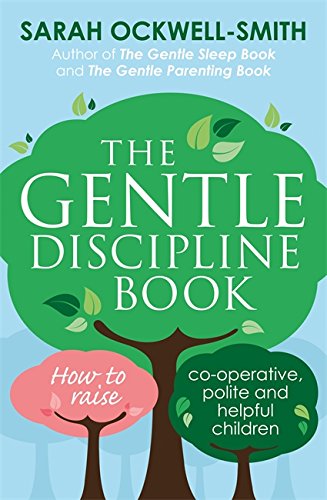
For more on fighting your own parental demons, rectifying your mistakes and controlling your temper, see my new Gentle Discipline Book – out now in the UK and coming soon in the USA and Canada,.
Praise is a controversial topic in Gentle Parenting circles. Many mistakenly think that gentle parents never praise their children and eschew any attempt to show children that we are proud of them. In fact, this is simply not true. Praise can and does form a role in Gentle Parenting, however it looks different to the praise that most people know and use.
So, what’s the problem with praise? Surely everybody likes to be praised? Doesn’t it help us to feel good and appreciated? Not, so. Research actually shows that certain types of praise undermine intrinsic motivation, that is it can make a child less likely to repeat a behaviour (that they have been praised for) because they want to. This is because praise works on raising extrinsic motivation. Extrinsic motivation just means that children behave for external reasons – ie to receive praise, it doesn’t mean that the children are behaving in a certain way because it feels good, or because they want to. The more we extrinsically motivate children, the more we risk undermining their natural desire to want to help and ‘do good’ and creating ‘praise junkies’, children who only ‘do good’ to receive verbal rewards. Damaging intrinsic motivation is not the only problem with praise though. Research also shows that certain praise can damage children’s self-esteem. This may sound bizarre, surely praising helps children to feel better about themselves? Actually, it doesn’t. It can actually cause them to struggle when they don’t receive praise, doubting their capabilities.
Does this mean praise is strictly taboo in Gentle Parenting? No, it doesn’t. However praise should be used carefully and mindfully. There are certain ways to praise that not only avoid the pitfalls mentioned above, but genuinely help children to feel good. Let’s look at some.
1. Praise should be specific
Much of the praise children receive is unspecific and insincere. ‘Good boy’, ‘Well done’, ‘You did it’, ‘Clever girl’. Praise in this manner is actually dismissive. It shows the child that you weren’t really looking at what they did. It is akin to praising a dog, it may work for a dog who doesn’t have the same depth of thought as a human, but humans need more. If you are pleased with your child, tell them exactly what for. “I saw you give the ball to the little boy because he was sad he had nothing to play with. I felt really proud of you for being so kind”. Hopefully you can see why that is so much more preferably to “good boy”.
2. Praise should be effort based
When we praise children only for their achievements and ignore their failures, we run the risk of causing anxiety and feelings of inadequacy. If your child has tried hard to remember their three times tables, but has struggled for months to get there. Don’t just praise them when they finally succeed. The three months of ‘failure’ is ultimately what caused the success and it matters far more. The effort is what you should notice, not the outcome. “Gosh, you are so dedicated to learning your times tables. I just know you are going to get there soon with all this practice” is far better than “yay, you did it!”.
3. Praise should focus on what children can change
There are certain things in life children cannot change. Their looks being one. Praising children for their looks, or fixed characteristics that they have no power to change, can actually cause issues with self-esteem as they grow. Praising children, particularly girls, for their appearance is dangerous territory. It can actually cause issues with body image as they grow, particularly in their teens (something I have covered in depth in my Gentle Eating Book). Praise only what they have control over.
4. Praise should be descriptive
This follows on from point number one. Descriptive praise shows a child that you are really watching them and appreciating what they are doing. If you child shows you a drawing that they have done, don’t be tempted to say “it’s lovely, well done!”, instead try to focus on specific aspects of the drawing “I can see that there are two birds in the sky and some lovely big pink flowers. Why did you choose to colour the flowers in pink? Where do you think the birds are flying to?”. Children thrive when you really ‘see’ them.
5. Praise should focus on what the children can repeat and learn from.
Carol Dweck is a psychologist from Harvard University, famous for introducing us to the concept of Mindsets. She differentiates between a growth mindset (when children accept they are not good at something – yet, but believe that they have the ability to improve) and a fixed mindset (when children believe that ability is fixed and give up because they feel they are not good at something). Praise, scarily can and does encourage a fixed mindset. A way to shift towards a more growth mindset is to focus more on the effort, not achievement, as in point two, but with an important addition – asking the child WHY they think they managed to achieve something this time? Ask them what they did differently and what they have learned that can help them when they are struggling with something next time.
Don’t be scared of praise and don’t berate yourself too much when you slip up. Even the most practiced gentle parents (including myself!) slip up sometimes. You will still find yourself echoing the non-specific achievement based praise of your youth. I say “well done” far more than I would like, however being mindful of praise should hopefully see you shift slowly to that which is more gentle and effective.
For more on praise and mindsets see my new Gentle Discipline Book – out now in the UK and coming soon in the USA and Canada.
Have you struggled with knowing how to discipline your child? Perhaps you’ve tried several methods that have had little results, or perhaps they worked for a while and then the behaviour returned. Perhaps you have found yourself confused about the best approach to discipline, or exactly when and why you should do something? The following five steps can help to achieve discipline that is not only gentle (yes – discipline can be gentle!), but effective.
Be Mindful of Why You Feel the Need to Discipline
The next time your child behaves in a certain way and you find yourself wanting to discipline – pause. Ask yourself why you feel the need to discipline. Has your child done something that you find unacceptable? Have they broken one of your boundaries? Do you want to use the moment to teach them how to behave in a more appropriate way next time? Or have you just been triggered by your past experiences? Far too many parents discipline their children because of conditioned responses from their own upbringing. Just because your parents disciplined you for something, it doesn’t mean you have to discipline your child for the same thing. Or perhaps you feel the need to discipline because others are watching you and waiting to see your response. Again, remember that the only right time to discipline your child is when you believe that they need it, whatever anybody else thinks. Mindful discipline ensures that your child is clear in your expectations of them.
2. Ask Yourself Why, How, What
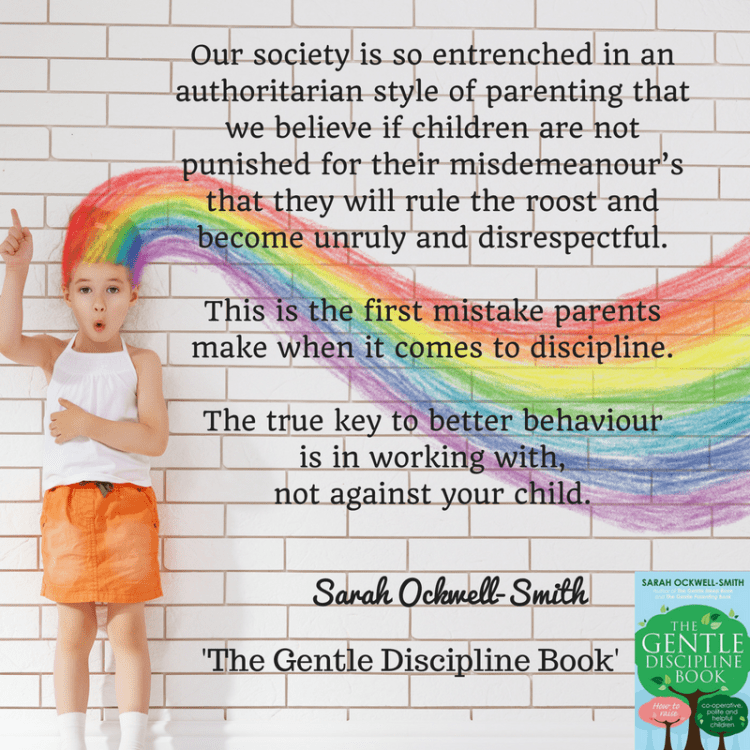
The best discipline happens when you work with, not against, your child. In almost every case, ‘unacceptable behaviour’ happens when the child is feeling some sort of emotional unease, or when adults simply expect too much of them. Understanding the reasons behind the behaviour is perhaps the most important task for parents. Before your respond, take a minute to ask yourself ‘Why, How, What’.
Why did my child do that? What triggered the behaviour?
How is my child feeling? What emotions could have caused the behaviour?
What do I hope to teach my child with my discipline?
There is no point jumping straight into the discipline unless you are clear on why your child is behaving in the way they are – and what you hope to achieve by disciplining them.
3. Understand the True Capabilities of Your Child
Far too many children are punished for being children. Punished for not having the impulse control and emotional regulation abilities of adults and punished for adults having expectations of them that are far too high. Punishing a child for an emotional meltdown, because they have immature regulation skills won’t help them to learn to regulate any quicker, but it may impede it. The next time your child behaves in a way that is undesirable, ask yourself “could they have handled this any better, with their level of brain development?”.
Being mindful of neurological development is critical when you discipline. Most mainstream discipline methods – time out, naughty steps, exclusion, shaming and loss of privileges – expect cognitive abilities from children that they just don’t have. Toddlers won’t sit on a naughty step, contemplate their actions and vow to do better next time, simply because they can’t. Preschoolers won’t hypothesise about future actions when they have been sent to their room, because they can’t. Effective discipline always starts from a position of understanding the neurological development of children and what they are capable of at any given age
4. Teach Through Modelling
The old Victorian adage of “do as I say, not as I do” couldn’t be more wrong. Children learn how to behave by watching their parents. The most influential discipline method of all is how you, yourself, behave. If you shout, or hit, in the name of discipline you teach your child that problems should be resolved with verbal or physical violence. If you rely on exclusion as a means of discipline you give your child a clear message that you are unwilling to be with them when they’re not feeling good. Every minute of every day, how you behave influences your children. If your child is constantly behaving in a way that you dislike, look to yourself for that same behaviour – they learned it somewhere.
For the best discipline, try to epitomise the greatest teacher you ever met, as much as possible. What was it about this teacher you admired so much? What qualities can you mimic? You simply have to be the behaviour you want to see from your child. A tall order indeed. Does this mean you have to be perfect all of the time? Far from it, the times when you make mistakes are perhaps the most valuable of all, because your child is watching to see how you handle them. Learn to be humble, admit wrongdoings, apologise for them and make them right. Especially when the wrongdoing is towards your child.
5. Reflect and Learn from the Experience
Have you ever noticed how many parents say “I’ve told him a million times and he just doesn’t listen”? Those same parents use the naughty step, or time out, several times each day, they fill up countless reward charts and yet the behaviour continues. Surely this should indicate that their current discipline methods aren’t working? Walter Barbe once said “If you’ve told a child a thousand times and he still doesn’t understand, then it is not the child who is a slow learner“, we would all do well to heed this advice.
Reflection, reflection and more reflection is key for effective discipline. What worked well last time and why? What didn’t work so well – why was that? Having a flexible approach to discipline, one that mimics a ‘growth mindset‘, is the only way. The best teachers are always analysing their teaching methods and results. Reflecting and learning from past experiences of discipline is key. Each day teaches us, as parents, something new and often it is our children that teach us. The day we think we know it all as parents is the day our discipline becomes ineffective.
If this article has piqued your interest in gentle discipline, check out my new discipline book. It is released under the title ‘The Gentle Discipline Book‘ in the UK and under the title ‘Gentle Discipline‘ in the USA and Canada. The book covers common tricky behaviours from babyhood right the way through to the teen years and how to cope with them in a gentle and effective way
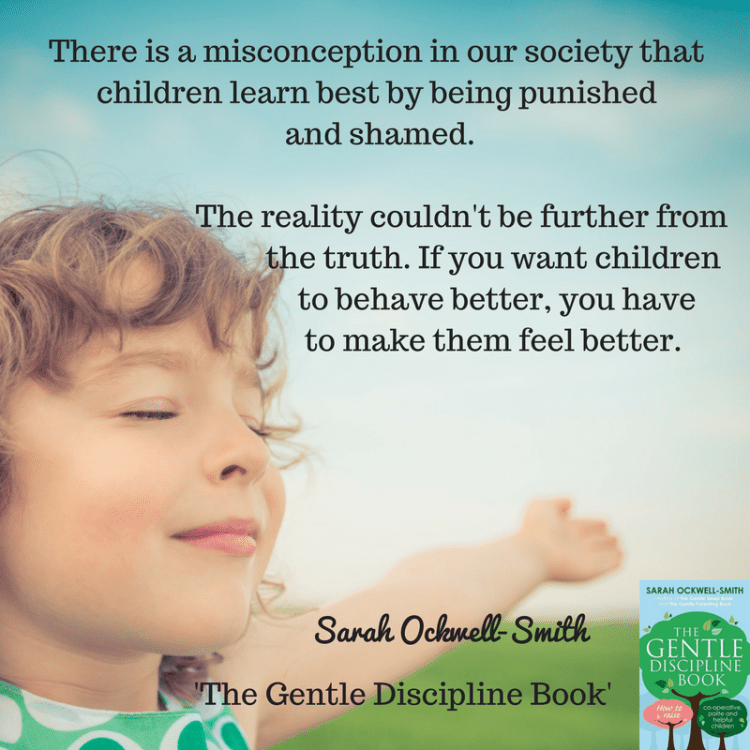
There is a misconception in our society that children learn best by being punished and shamed. The reality couldn’t be further from the truth. If you want children to behave better, you have to make them feel better.
Why do most ‘parenting experts’ only tell you what to do, leaving out the ‘Why?’ Surely that’s a more important place to start? To enter the teaching profession, you need to study how children learn long before you can ever begin to teach them. Yet as parents, we are thrown in at the deep end, holding a newborn baby in our arms without a shred of training. Taking some time to understand how children learn makes disciplining them infinitely easier.
Society today takes the view that children who misbehave are being deliberately naughty – that they plot and scheme to get what they want and make a conscious decision to behave in ways we dislike. But what if they behave undesirably, not deliberately, but because they cannot do anything else? most common discipline methods focus on encouraging children to do and be better, so that they are motivated by rewards if they behave ‘well’ and punishments if they misbehave. This would seem sensible, but it makes one huge mistake. It presumes that the child is not motivated to be ‘good’ and that they have the capability to change their behaviour. But maybe they already have the motivation? Maybe they already want to do better? And perhaps their brains – their capabilities – are holding them back? Are they behaving in a certain way simply because they cannot behave in any other? Mainstream discipline methods can achieve absolutely nothing here, except make the child feel worse.
When a baby is born they have 200 billion neurons and their brain is around 30 per cent of the size of an adult’s. Each day it grows by around one and a half grams and by the age of two it will have reached 75 per cent of its full size. During the first three years of life, around seven hundred new neural connections, or synapses, are made in the brain every single second. These connections serve as the ‘wiring’ for the brain. By the time a child is three years old they have formed over one thousand trillion synapses. These connections – formed through a combination of genetics and life experience – are of great significance to the future brain architecture and have a significant impact in adulthood. As such, the environment a child lives in, including their relationships with their main carers, can have as much influence on their brain development as genetics.
Regulating our emotions is quite a mature skill. As adults, we may be able to press the pause buttons in our brains when we are tempted to shout, swear or act violently towards somebody. If we feel anxious or scared, we may be able to talk ourselves out of our emotional discomfort by rationalising and diffusing our feelings. Children, however, do not have these skills – at least not to the same level as adults. And this difference in emotion regulation ability is the cause of a lot of stress for parents who expect their children to have the same capabilities that they do. In fact, self-regulation takes years to develop, and getting to know why your child lashes out, when you yourself are able to stay calm, should be a foundation of discipline. Sometimes, children who always shout or cry just simply cannot help it.
A good analogy for an emotional meltdown – or tantrum, if we are talking about toddlers – is to imagine a pot of water on a stove. The gas is on full and the water soon begins to boil. Soon it is boiling over, spilling down the sides of the pot. The gas is still on full, so the water continues to boil until the pot runs dry. That’s a meltdown or tantrum. Left to their own devices, perhaps in time out or on a naughty step, a child’s ‘pot’ will continue to boil over until either the source is exhausted or the child is so drained that they are ‘empty’. Some may think time out and naughty steps – or any other ‘discipline’ method where the child’s feelings and behaviour are ignored (in the false belief that this will stop it happening again) are effective. Yet how can the child learn anything, which is the true goal of discipline, if they are left to ‘boil over’ and run dry? Time out or the naughty step (which are essentially one and the same, with or without the addition of a designated step, stool or chair) rely on punishing the child’s wrongdoings by excluding them from those they love. The idea is that while they are excluded they are to consider what they have done wrong, how they made the wronged party feel and how they can behave better next time. Once they have done this and are calm, they are allowed to leave the exclusion area. It sounds so simple, doesn’t it? But most children who are socially excluded are between the ages of two and ten and neuroscience shows that at any of these ages a child is not capable of the complex thought that the discipline method requires. In order for them to analyse their behaviour and hypothesise about how they may behave in future they have to have a firm grasp of concrete thinking – or, rather, they need a good level of critical, analytical and hypothetical thought. These thought processes are all the domain of the frontal lobe of the brain, which is not mature until just before a child enters their teenage years. It is only at this point that their thought processes become more adultlike in terms of their problem-solving abilities and capacity to think critically. Without an appropriate level of neural connectivity in the frontal, thinking part of the brain a child is incapable of the thought processes demanded by time out and the naughty step. They cannot (and do not) analyse their behaviour and consider future outcomes. At best, they will sit or stand quietly because they have learned that it is the only way they are allowed to rejoin their friends and loved ones.
Understanding how children’s brains develop is one of the cornerstones of gentle discipline. Unfortunately, many of today’s most common discipline methods are not mindful of this stage in a child’s life. Effective gentle discipline should always consider the child’s current level of cognitive ability, both when looking for the cause of their behaviour and when seeking an appropriate response.
This is a small excerpt from my new discipline book. It is released under the title ‘The Gentle Discipline Book‘ in the UK and under the title ‘Gentle Discipline‘ in the USA and Canada in the summer. The book covers common tricky behaviours from babyhood right the way through to the teen years and how to cope with them in a gentle and effective way
Children learn by experience. Or more specifically they learn when they reflect on something they do, or did. We can tell them of our experiences and we can give them advice, however they only truly learn when they experience something themselves.
Have you ever wondered why your child does something, even when you’ve told them not to and explained why they shouldn’t do it? Perhaps your three year old insisted on touching the oven door, even though you told him not to because it was very hot. Being told something and doing it yourself are two very different things. It is only when the child touches the oven door and experiences the heat that he truly understands and learns.
For parents, understanding the repetitive patterns in the behaviour of young children, particularly their play, can be very helpful, especially when the child is behaving in a way that could be deemed ‘naughty’. The word ‘Schemas’ is used frequently amongst early years education and childcare professionals to describe these repetitive behaviours in general, however names are given to different patterns relating to specific behaviours, these include the following:
Connection Schema
In this schema children learn how to connect things together. They will often be engrossed in building train tracks, sticking building blocks together, or laying pieces of paper on the floor to make a path.
Containing Schema
The containing schema occurs when children place objects into a container of some form. For instance they may put all of their crayons into an empty bag, or inside a large box.
Enveloping Schema
In this schema children learn to cover things up. For instance they may cover their teddy bear with a blanket, or cover their food with a napkin.
Positioning Schema
In this schema children are learning about the positions of one object in relation to another. They will often move their food around to different positions on the plate, or may want to sit in a different position to the one they have been instructed.
Rotation Schema
This schema is all about objects rotating. Children may be engrossed by the washing machine or the motion of wheels turning. They will often try to turn things that they think may rotate, such as the hands of a clock or rolling a ball along the floor.
Trajectory Schema
The trajectory schema teaches children about movement and direction. They will often throw items to observe their trajectory, for instance food thrown from their high-chair or water thrown into the air.
Transforming Schema
In this schema the child is interested in changing properties of objects. They may pour their juice into their porridge and explore the resulting transformation with their fingers. Or they may pour sand from their sand pit into their hair, to feel the change in texture.
Transporting Schema
This schema is used to describe the action of children moving objects from one place to another. For instance moving cans stacked in a cupboard to a different area of the kitchen, or pushing a cart, containing building blocks, from one part of the garden to another.
Understandably many of these schemas can be problematic for parents. The child’s learning is often at odds with social rules and expectations and can often be very messy! While parents would much rather their children didn’t pour juice in their dinner, empty a packet of baby wipes and put them all into the toilet bowl, or rearrange the contents of their kitchen cupboard, they can rest assured that not only is this behaviour normal. It is indicative of great learning
Gentle Parenting is a parenting style gaining increasing followers and headlines. Alongside this heightened awareness however comes increasing misconceptions and misunderstandings. In this article I would like to consider what I believe the top ten myths surrounding gentle parenting, and hopefully correct them a little.
Gentle Parents Don’t Discipline
Perhaps the top myth surrounding gentle parenting is that those who follow it don’t discipline their children. Children are believed to be allowed to run riot (see point 2 below). Gentle parenting and discipline are perceived to be at odds with each other, a point that was highlighted to me when I shared details of my newest book ‘The Gentle Discipline Book‘ on my personal Facebook timeline. A friend immediately commented: “I think you should change the title, how can discipline ever be gentle? It’s always harsh, that’s the point of it.”
I spend a lot of time in The Gentle Discipline Book talking about what discipline is (in short – it means teaching, in this case teaching our children) and what it isn’t (smacking, popping, tapping, naughty steps, time out, sending to their room, grounding etc..). Modern western society believes discipline and punishment are one and the same. They are not. There are many ways to teach children that don’t involve punishing them, or making them feel bad. In fact the most effective discipline makes children feel good. It inspires them to do better, rather than shaming them. The best teaching methods are inspirational and uplifting, ask any teacher. Why would we ignore decades of research on how children learn best? Gentle discipline focusses on exactly this – teaching children why certain behaviours are not appropriate and teaching them how to do better. How do we do this? Mostly by being a great role model, after all the best teaching comes from teachers students aspire to be. Is this all we do? No, often we will use appropriate consequences, particularly natural and logical ones, rather than the illogical consequences (aka punishment) used in mainstream discipline. For more on consequences used in gentle parenting check out this article. We have boundaries and we enforce them.
I would actually say gentle parents discipline more than any other parents.
2. Gentle Parents Have No Control Over Their Children
This really follows from point one above. In gentle parenting the children are perceived to ‘run rings around their parents’. The parents are seen as passive and permissive, letting their little darlings do anything they want. This is not true.
Gentle parenting is a dance of control. What do I mean by that? I mean it is a partnership and one that changes fluidly, sometimes one partner leads, sometimes the other. When it is appropriate, gentle parents like to give their children control. Giving control as much as possible allows children to fulfil their need for autonomy and independence and stops unwanted behaviour that commonly occurs when a child is desperate for more control over their lives (the most common control seeking behaviours are issues with eating, sleeping and toileting). Things that gentle parents may give control over include allowing the child to choose their own clothing (after ensuring that it is weather appropriate), regulate their own eating, controlling their own pocket money and how it is spent and taking control of their own play. Things that gentle parents don’t give children control over include crossing roads, touching objects that don’t belong to them (particularly if they are fragile) and complete free range over how they spend their day, especially if there are important appointments to attend.
3. Gentle Parents Are Too Indulgent
Gentle parents are believed to allow their child to have and do whatever they want. This is not true. Criticisms say that they “indulge their children too much”. Mainstream parents commonly believe that children are out to bleed their parents dry emotionally, energetically and financially. Right from the off they believe that babies are manipulative, crying to get their parents ‘at their beck and call’, they believe toddlers are ‘showing off to get what they want’ and believe that teenagers only sulk ‘because they want attention’. Common discipline methods here all involve ignoring the child. This is mistakenly believed to create a less demanding individual. In truth, all ignoring does is make the child keep their feelings to themselves, they don’t go away, they just stop displaying them. Gentle parents simply allow their children to always show their needs and when possible they respond to them. A crying baby, a tantruming toddler and a sulking teenager are perceived to all be showing one thing: a need for connection. Gentle parents would try to support their children and their needs. They would try to help their children to feel better by not ignoring them. If this is deemed indulgent, then so be it, but what a callous world we now live in. Gentle parents just try to remove a little of that callousness in their own family.
4. Gentle Parents Are All Stay At Home Parents With One Young Child
Ah, the demographic judgement. Gentle parenting is hard work, I’ll give you that. In fact any parenting is hard work. Throw in a job, a handful of children and a teenager and it gets hard, really hard. In fact there are days when we all think “I just can’t do this anymore”, but we get back up and we keep on going. Gentle parents seek to better themselves, but aren’t martyrs. They know when they need a break and they allow themselves to be ‘good enough’.
I have full-time job and four children, two of whom are teenagers. I’m not superwoman, thousands of people are in my position and we all manage to parent gently. Yes, it is far easier when you don’t work and have only one child, particularly if that child is a baby or a toddler, however at the time it doesn’t feel easy. As your children grow, so do you. You learn together. As a parent to teenagers I have to say I can’t imagine following any other style of parenting, because it just simply doesn’t work when they are bigger than you. Teenagers don’t like stickers and you can’t intimidate them, or force them to sit them on a naughty step. The teenage years are often when mainstream, harsh discipline based parenting starts to unravel. I believe this is why the teenage years have such a bad reputation. I absolutely love being a parent to teenagers, we have a great relationship and I put that down to all of the years of gentle parenting investment.
5. Parents Are All ‘Alternative’
Gentle parents are all hippy, bleeding heart liberals. They all breastfeed until their children are in school, that’s if they send them to school at all (for the record I did the former, but my kids are all in school). I think I’m pretty mainstream, in my lifestyle and my looks, as are thousands of gentle parents. Some are the opposite and that’s what makes it so wonderful – there is no special ‘person specification’. You can have rainbow hair, or spend thousands per year on brazilian blowdrys. You can be vegan, or eat steak every day. You can home-educate or use mainstream school, breastfeed or formula, you can wear tie-dye, Primark or Boden (I personally rock all three, often at the same time). Atheist, Christian, Muslim, Pagan – religion is irrelevant. So is age, sexuality and political leaning. One thing I have noticed, is that there is far more diversity (and acceptance of it) amongst gentle parents and surely that is an amazing thing to teach our children?
6. Parents Inhibit Their Children’s Independence
Gentle parents are commonly perceived to ‘stifle independence’. They don’t leave their babies to cry at night, so some believe they are “not teaching them to self settle” (read here for why this creates nothing of the sort), they don’t push their toddlers into nursery if they aren’t ready (though thousands do go happily – but the key is in working at the child’s pace) and they allow their children to slip into their bed at night if they are scared or anxious and need a hug. Sometimes they stay in the parental bed for several years, sometimes they pop in once or twice per month. The key is that the attachment always occurs as a result of the child’s cues. When the children are ready to detach, gentle parents open their arms and watch them fly. Independence always starts with dependence, you can’t force it to happen. It happens when children have had their needs met and as a result feel confident enough to walk out into the big wide world alone, knowing that if they need them – their parents are there for them. Gentle parenting creates, not stifles, independence!
7. Gentle Parents Don’t Prepare Their Children For ‘Real Life’
“….but real life isn’t all hearts and flowers. Real life is full of disappointments and demands, rules and regulations.” Gentle parenting apparently ill-prepares children for life. A life where they will have to follow rules, not bend them. A life where they will have to endure harsh discipline. Why not prepare them for it now? Why not prepare them for better? I ask. Why raise a child to blindly follow rules that service nobody other than the elite when you can raise them to question if there is a better way? Why raise children to ‘accept their place’ when you can raise them to aim for higher? Why raise children to accept the bigotry and hatred of society when you can raise them to try to change it?
Does this mean you are raising rebels? No, it means you are raising thinkers. Thinkers know when questioning is appropriate and they know when to keep their head down. Thinkers understand respect, respect for others and themselves. They know when to respect boundaries and rules (after all they have respected their family’s rules for years). Gently parented children are empathic, they understand how others feel and when certain behaviour would be inappropriate. They know when they can rock the boat a little and when they should leave it be.
8. Gentle Parents Are Raising A Generation Of Spoilt Brats
This is one of the saddest criticisms I’ve ever heard. Why? Because it mistakenly presumes you can spoil a child with love. You cannot love a child too much. Ever. If you love a child as much as they need, you allow them to flourish. They become more empathic and more secure. Security and empathy are the keystones of respect and understanding. They create kind, confident and compassionate individuals, the very opposite of the shallow, self-absorbed spoiled individuals created by mainstream parenting. Why? Because when the child’s needs for love and emotional support aren’t met, they spend their life trying to fulfil them, some through constant unhealthy relationships, some with food, some with alcohol, some with drugs.
9. Gentle Parents Never Touch Their Children Without Their Permission
Simply not true. What they do do however is to try to protect the child’s bodily autonomy. If children don’t want to kiss or hug a friend or a relative, gentle parents won’t force it (see this article for more). They understand that the ability to say “no, stop” begins in childhood. Of course they spontaneously hug, kiss and hold their children’s hands though, but if the child says “stop”, they do.
10. Gentle Parents Are Scared of Making Their Children Cry
Actually gentle parents probably allow their children to cry far more than mainstream parents. Crying is normal, it is a healthy way to release difficult emotions. As parents allowing your child to cry and supporting them when they do is the healthiest response. Our society is too full of dismissing tears. We say “stop crying, don’t be a baby”, “big girls don’t cry, “crying is for sissies”, “boys don’t cry”, “man up” far too much. We try to distract children from feeling and dealing with their own emotions and we wonder why they grow up to struggle with them as adults. Crying is not the problem here. When we discipline, gentle parents will often make children cry and that’s OK, because when they do we support them. Do we always revel in tears? Absolutely not, tears from a baby always need a response, whether it is day or night. Read more about crying in this article.
To sum up, if people ask me to explain gentle parenting in a nutshell I always say the same “treating children how we would like to be treated ourselves”. To this day I don’t understand why it is so controversial, except perhaps that we don’t treat ourselves very well?
For more on gentle parenting myth-busting – and understanding what it REALLY is – see my quick video explainer here:
If you would like to learn more about gentle parenting, particularly from a discipline perspective, check out my new ‘Gentle Discipline Book‘
This isn’t going to be a ‘how to’ article, explaining how to wean your child off of napping on top of you. It’s an article encouraging you to embrace it, and how to spend your time when it happens.
I am often asked for help to wean a baby off of ‘contact naps’ as I like to call them – by that I mean naps with a baby (or toddler) laying either directly on top of you, or curled up at your side. While it is possible to stop this from happening (slowly and gently) and encourage more independent naps, I would like to spend some time thinking about why ‘in contact’ naps seem so taboo.
The gift of being able to get your child to sleep easily, calmly and relatively quickly is a huge one. So many parents struggle with trying to encourage independent naps, I often wonder why the message to embrace non-independent ones is not louder. The two biggest criticisms I hear are “you need to encourage independence, it’s not good for them to be so reliant on you” and “naps laying on mum or dad aren’t as good quality as naps in a cot/crib”. These criticisms are utter rubbish. We know from every single piece of psychological research that the key to creating a confident and independent child is to allow them the dependence that they need on us, when they need it. For some babies and toddlers this means the need for physical contact when they are at their most vulnerable – in the state of sleep. You can’t *make* your child sleep on you if they don’t want to and they won’t do it forever. They WILL outgrow the need and when they do they will be all the more confident for it. As for the myth of naps only being ‘good quality’ if they are in a cot or crib, I have no idea where this one came from. It is so wrong and obscure it’s almost laughable, only the fact millions of parents have been scared by it is no laughing matter. Sleep is sleep, it really doesn’t matter where it happens. Although I would say that sleep is better when it happens with a calm, secure child and for many that means ‘in contact’. Simply put, there are no negatives to ‘in contact’ naps for children and they will outgrow the need for them.
Allowing ‘in contact’ naps is perhaps the least stressful option for the whole family. Accepting and dare I say, enjoying, them is often the best option. Being pinned down under a snoozing child for an hour or so can quickly lose its appeal though. Perhaps my best advice therefore is thinking about what to do when it happens, not trying to prevent it from happening. Take some time to prepare and plan your time.
Be prepared – make a flask of tea or coffee, have a glass of water and a snack prepared and keep it at arms’ length. Keep your phone easily accessibly, again at arms length and not trapped in a pocket, the same of the TV remote, book or magazine.
Make nap time ‘box set’ time. Often TV episodes last for around 45 minutes, a perfect time for a nap. Watch an episode per nap and quickly catch up on your favourite series, or find a new one. Netflix is your friend. Consider headphones if your child is bothered by the sound.
Make nap time reading time. Discover new books, or read those you bought ages ago and didn’t get round to reading. Kindles can be easier to read one handed than a paper book.
Take time to meditate. Nap time can be a wonderful time for calmness and mindfulness. Try out the free trial on www.headspace.com
Listen to some music. Catch up on your favourite artist, or new recordings that aren’t baby or child music! Headphones are likely a must here!
Take a snooze yourself. Daytime naps can be a great time to catch up on lost night sleep.
Just be. We don’t spend much time being still in our busy lives, especially when we’re parents. Take nap time to really look at your child, watch their chest softly rise and fall as they breathe, smell the baby scent on their breath, look at the tiny curls in their hair, stroke their foreheads and cheeks, hold their little podgy hands in yours and feel the reassuring weight of their body molding into yours. These are the memories that will stay with you forever.
The NEWLY UPDATED Gentle Sleep Book – out now! If you would like to understand and learn how to improve your baby, toddler, or pre-schooler’s sleep WITHOUT cry-based conventional sleep training, this is the book for you!
A fashionable buzzword in the ‘sleep training industry’ at the moment. It is everywhere you look. On every sleep trainer’s website, in the blurb on every baby sleep book, in the names the trainers call themselves, or their social media descriptions. Gentle, gentle, gentle, gentle.
On the one hand I am incredibly happy and excited that so many baby trainers have realised that a shift is happening, parents don’t want to leave their babies to cry. Cry-based sleep training is definitely on the wane, gentle is the new order of the day. This makes my heart sing. Perhaps the long overdue compassionate and instinctive paradigm shift is coming? Perhaps even the harshest and coldest of baby trainers is having second thoughts? – A gentle sleep revolution, led by parents, is my dream.
Then comes the cynicism in me. It has a loud and pessimistic voice. GENTLE is a buzzword, a marketing term, a PR dream. Gentle sells where crying once used to. Promise to get a baby sleeping through the night gently? Well surely that’s the miracle recipe? What parent could possibly refuse? Where is the regulation surrounding the use of the word ‘gentle’ in relation to sleep training? Which advertising organisation steps in and questions the gentleness? Sadly in the sleep industry advertising is as ill-regulated as the profession itself. It just doesn’t exist. Why does this matter? Because there are far too many proclaiming that their methods are gentle when they are anything but………they are far, far from gentle. They dupe parents, who only realise that the advice is not as gentle as expected after they have paid for it. By then their money is spent, usually money they could ill afford in the first place. They are left with the same old advice: cry and don’t pick up, reduce contact, put down awake, reduce or stop night feeds and stop bedsharing. Sure they may be told “pat her back”, “rub his stomach”, “stay in the room and speak to her”, “comfort him, but stay firm and don’t pick him up”. None of this is gentle though. It is the same old behaviourist approach wrapped up with a new ribbon and called ‘gentle’ because the parent stays in the room. It means nothing. It is no more gentle than controlled crying or cry it out. Each week I have at least five families contacting me telling me “we paid to work with somebody who said they offered gentle sleep training, but it really wasn’t gentle, it was the same old stuff”. Buyer beware, buyer beware!
I am often asked if it is possible to do ‘gentle sleep training’. Yes, I believe it is, although the use of the word ‘training’ is a little erroneous, for it is really the parent that is being trained (I use the term for my own services purely for SEO reasons). Sleep is a biological development, a milestone, you can no more train a baby to sleep in an age inappropriate way, than you can teach them to walk as a newborn. You can only train them to not signal to their needs to their parents. I don’t believe any parent really wants that.
Is it possible to work with a baby’s sleep gently? Absolutely, because in every case it is not the baby that needs changing or fixing, it is usually something the parent is, or isn’t doing. That said, it is only possible to change sleep gently to a biologically appropriate level. The fact remains that babies don’t sleep through the night, while that may be a problem for parents in our busy world, the reality is there is normally nothing wrong with the baby.
What should you look for when considering if sleep advice really is gentle? Well, my own beliefs and ethos for my sleep work are as follows:
You must start with realistic expectations. Are you looking for sleep that is not normal for the age of your baby? Any true gentle sleep trainer will tell you if what you are looking for at a specific age is not appropriate. I turn as many clients away as I take on for this very reason.
The approach needs to be holistic – this means the sleep trainer should consider what is happening in the daytime (classes and activities etc..), what the baby is eating, the birth – and psychological and physiological effects from it, the environment the baby sleeps in during the day and night, naps (where, when, how long), evening routines (not just the bedtime routine), how the parents are feeling and what support they have and more…..if these aren’t mentioned then the advice is not gentle.
You should be given realistic expectations in terms of improvement. I always tell my clients they will need to wait 6-8 weeks for a good improvement and in that timeframe they have some hard work to keep up consistently. Gentle sleep work goes at the pace of the baby, slowly. Working with, not against, the baby. If it offers quick results, it is not going at the baby’s pace. It is simply not possible to change sleep gently in less time than this. Anybody who says it is, is not truly offering gentle advice.
True gentle sleep advice does not blame anything, or anybody, for causing sleep problems. You can change sleep gently no matter if the baby is breast or formula fed, bedsharing or cot sleeping, without having to stop doing anything. Babies can still be feeding at night and can still fall asleep at the breast. None of these things are problems, none of these things need to be stopped. Any advice to stop them (especially night feeds and feeding to sleep) isn’t truly gentle.
Gentle sleep advice should never, ever, ever encourage the parents to allow the baby to cry. If the baby does cry (which should always be absolutely minimal, seconds or minutes at most) they should always be ‘in arms’. Any advice to ‘settle the baby in the crib’ is not gentle. We know from research that a baby has a very different physiological reaction when they cry being held by their parents. It doesn’t help them if you are standing next to them and patting them if they cry, you need to pick them up!
I can pretty much sum all of this up by saying “if it feels wrong to you, then it probably is”. You have instincts to nurture your baby for a reason, don’t be fooled by an expert who promises that their advice is gentle if your instincts are screaming that they aren’t. When I work with clients I view my role as supporting them, just as much as their babies. True gentle sleep work focusses on helping parents to feel empowered and supported. If you do not feel either of these then you have a right to question the advice you have been given. Please, listen to your instincts and don’t be guilted into anything, however desperate you are, there is always another way. Don’t be sucked in to ‘the gentle trend’, beware the wolf in sheep’s clothing.
The NEWLY UPDATED Gentle Sleep Book – out now! If you would like to understand and learn how to improve your baby, toddler, or pre-schooler’s sleep WITHOUT cry-based conventional sleep training, this is the book for you!
You can also sign up for my free parenting newsletter HERE.
Please note: I have NEVER trained any sleep consultants and never will, please be wary of anybody who says they have trained with me, at most they have attended a three hour workshop with me intended for parents.
It’s time we stop guilting parents about bad habits, sleep crutches, unhealthy bedtime props and sleep mistakes. Almost every day I am contacted by a parent who is worried that they are creating bad habits, or inhibiting their child’s independence. They have been warned (usually by healthcare professionals or sleep trainers) that in feeding or rocking their child to sleep, they are creating problems for the future. They are told that they should teach their child to ‘self soothe’ (read here for why there’s no such thing), they are told to stop feeding their baby at night (and that these feeds are negatively affecting sleep, teeth, daytime eating, confidence and more) and they are told that they are mollycoddling their child by cuddling them to sleep. These parents are led to believe that their child has a very serious sleep problem and they believe that this is a problem that they have created. The truth? A problem is only a problem if it is a problem for the parent, or the baby, if the family is happy who on earth are these people to insinuate otherwise?
These sleep warnings and sleep guilt are widespread, not surprising given that the messengers often make money from parents believing in them (after all, if there are no problems, no fixing is needed). Sometimes, where no profit is involved, the messages are spread out of a degree of ignorance, a lack of true understanding of human norms. Often there is a sad mix of both. They get under the skin of parents, the niggling doubt eroding an already fragile confidence and self-belief. Parents start to believe that they do have a problem and worse, that they are the cause of it. In truth they are anything but.
There is no evidence that shows rocking, holding or feeding to sleep is damaging in any way whatsoever, whatever age the child is. There is no evidence that shows feeding at night (beyond an arbitrary age) causes long-lasting sleep problems, or any others for that matter. I cannot shout this loudly enough. These things are not problems *unless* they are a problem for you, or your baby. Don’t let the sleep guilt spreaders get under your skin.
Will you need to rock, hold or feed forever? Of course not! (read here about why these things aren’t habitual). In time, your child (baby or toddler, perhaps even preschooler) will outgrow the need. This natural independence is magical, if a little sad for you, in one fell swoop it proves the naysayers were wrong with a capital W! (read here about when you may expect independent sleep onset). We are the only mammalian species in the world who try to force our offspring to be independent before they are ready. Nobody tries to train mother cats to not sleep curled up with their kittens, or chimps to not feed their babies to sleep, or during the night, because these behaviours are innate, natural and normal.
We must stop trying to guilt parents into ignoring the same instincts, whether for profit, pride or productivity. Parental instincts aren’t wrong, guilting parents into ignoring them is. Parents should be advised to cuddle, feed and rock to their hearts’ desires and be encouraged to ignore any thoughts of problems, habits and crutches. If we feel inclined to give them any advice it should always (and only) be:
“There are no problems, unless it is a problem for you and your baby. You’re doing a great job, keep on doing what you’re doing, for one day your child will be grown and not need you anymore”
The NEWLY UPDATED Gentle Sleep Book – out now! If you would like to understand and learn how to improve your baby, toddler, or pre-schooler’s sleep WITHOUT cry-based conventional sleep training, this is the book for you!



 Sarah Ockwell-Smith
You must be logged in to post a comment.