Two Under Two? No Problem! The Real Difficulties of Welcoming a Second Child

When my children were small, I had four children under four years of age. My first and second were both 15 months apart, my third followed 14 months later and my last 2 years after number three. Adding a new baby into the mix of a toddler is exhausting, especially if the firstborn is still sleeping erratically. From the toddler’s perspective adding a new member to the family is a little like your partner bringing home a new boyfriend or girlfriend and trying to assure you that they do not love you any less than when it was just the two of you. Pretty devastating. Tantrums, unpredictable behaviour and regressions in sleep and toileting are fairly inevitable. A lot of understanding and empathy from the parent’s perspective is needed, not just in the first few weeks but several months, even years down the line.

In many ways however, I actually found it fairly easy mothering a newborn and a toddler. I had never made it out of the sleepless nights, so they didn’t come as a shock to me. I was used to toting armfuls of baby paraphernalia, I had never made it out of breastfeeding bras or started wearing dresses again. I had no social life to mourn and my entertainment already consisted largely of Peppa Pig and Thomas the Tank Engine. The new baby spent most of the day snuggled in a sling (invaluable with a small age gap!) and in many ways didn’t impact much on normality with my toddler. I even relished the night feeds with the baby as it afforded me quiet time to bond with him or her. Small age gaps are physically hard work (especially on your body), but can in many ways be easier on the older child in terms of jealously and resentment towards the new baby.

What nobody talks about though, is the intense emotional response to birthing a second child. No amount of sleepless nights or draining days compare to the inner turmoil created by the arrival of number two. When my second child arrived the joy was interspersed with immense feelings of guilt and doubt. What had I done? My selfishness and desire to have a second child had ruined my firstborn’s happy existence. Everything we had until that point was gone. Our easy daily routine, the classes we went to, our shared naps, our quiet story time all changed in the space of a few hours. What had I done? Had I made the right decision? It was a decision I often regretted.

When I was pregnant with my second child I dreamt of my two children playing together, being friends for life. I imagined a blissful, Hallmark’esque smiling family of four. Nobody tells you about the guilt though. Nobody tells you about the mourning for your life as a family of three. Nobody tells you about the upheaval your firstborn will go through and how every hour you feel your heart will break for them, wishing for the time when it was just you again, just once more. Wishing you could help them to understand that you love them just as much as before, maybe even a little more now.

….and then there is the baby. The poor sweet baby who you don’t have time to cuddle anywhere near as much as you would like. Even if your toddler is not demanding your attention, or your hands, the guilt you feel at holding your newborn while your toddler is in the same room is like nothing you have ever felt before. The only guilt that surpasses this is that you feel at not holding your newborn as much as you did your firstborn. You snatch golden moments with your newborn when you can. Often though hours can go past until you realise that although your baby has been strapped to your chest or at your breast all day that you have barely noticed them, let alone had time to connect with them, talk to them or consciously feel their body against yours. The guilt increases even more.

The classes you took your firstborn to don’t happen with your second. The playdates focus more on the baby tagging along on a toddler outing. The new baby memory book never makes it out of the wrapper in stark, mocking contrast to the neatly filled in journal you kept first time around. The wall full of professional photos of your firstborn is accompanied by two or three home snaps of your second. The  lovingly prepared 100% organic home cooked food you fed your firstborn is reluctantly replaced by more ready-made meals than you would care to admit.

You feel like you are not meeting either child’s needs. Your baby cries when you are cleaning your toddler’s grazed knee and mopping their tears. You have no choice but to leave one to cry. Your toddler cries just as you have calmed your firstborn enough to get them to feed. You have no choice but to leave one to cry. Too many times you cry too. What have you done? You have destroyed your toddler’s life and your baby deserves better. You cry some more, your children cry with you.

This is the truly hard part of welcoming a second child. No amount of sleepless nights, constant nappy changing, tantrum taming or sheer physical exhaustion comes close. Is this unique to ‘two under two’? I don’t think so.

The good news is that in time the guilt fades. It may take months, or even years (the latter is true for me) but the first time your children hug, or hold each other’s hands. The first time they share a secret joke together that you’re not in on, when they look into each other’s eyes smiling and let out big belly laughs. The first time they play together and don’t want you to join in. The first time they curl up to sleep together and beg to be allowed to sleep in the same bed. These are the times that make it worth it. These are the times when you begin to realise that maybe you haven’t ruined their lives after all, but given them something better – a friend for life. The guilt fades as the memories build.

As a mother of four, no transition was harder for me than going from one to two children. Two to three? easy in comparison, three to four? a breeze. I just wish somebody had warned me beforehand about ‘second child guilt’. Why is it so unspoken of in our society? Why won’t you read about it in the flurry of ‘second baby’ or ‘two under two’ articles about to hit the shelves, air waves and internet?

For more on the emotional – as well as practical – issues involved with having a Second Baby, check out my Second Baby Book.

2ndbaby

Sarah

p.s: Come and chat with me on FacebookTwitter and Instagram You can also sign up for my free weekly parenting newsletter HERE.

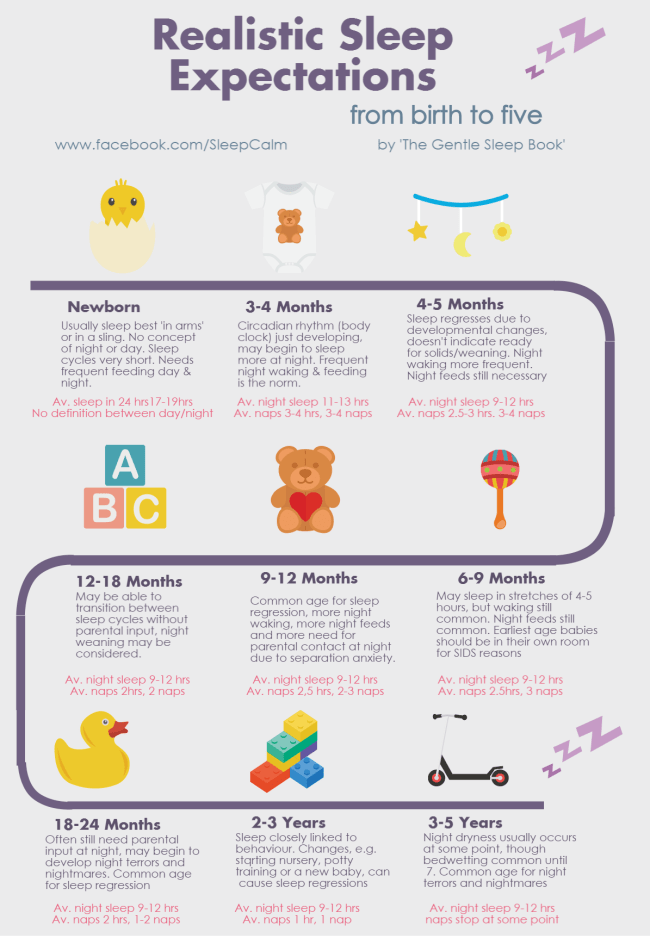
How Long Should Babies and Toddlers Sleep For? (Infographic)

The following infographic provides a realistic look at baby, toddler and preschooler sleep. Including average night waking, need for night feeds, sleep regression and average amount and timings of naps.
NOTE: This is averages only, some babies will sleep more, some less. They are all different!

The naps are the *total* for all naps combined, not per nap – e.g at 3-4 mths TOTAL naps are 3-4 hours, usually split over 3-4 different naps, so averaging around 1hr each.

For more information  on realistic sleep expectations and gentle ‘sleep training’ advice see The Gentle Sleep Book or visit The Gentle Sleep Book Facebook Page.

average baby sleep, average toddler sleep, average baby nap, average toddler nap, how long should baby sleep for? how long should toddler sleep for?

The NEWLY UPDATED Gentle Sleep Book – out now! If you would like to understand and learn how to improve your baby, toddler, or pre-schooler’s sleep WITHOUT cry-based conventional sleep training, this is the book for you!
sleepbook-1

Sarah

p.s: Come and chat with me on FacebookTwitter and Instagram 

Or watch my videos on YouTube

You can also sign up for my free parenting newsletter HERE.

One simple way to improve your baby or child’s sleep today!

Did you know that millions of parents around the world are making one very simple, but huge, mistake that is potentially inhibiting their child’s sleep (no matter their age) and contributing to difficult bedtimes and frequent night waking.

This mistake is perpetuated by thousands of nursery product manufacturers around the world. In fact when you realise what it is you will be shocked at the products on sale that only add to, rather than aid, the problem.

What is it?

THE WRONG LIGHTING.

Do you have a nightlight in your child’s room? Perhaps something in the shape of a cute animal, something that you plug in that emits a dim glow all night, or perhaps a glowing thermometer or light show. If you do then you most likely need to get rid of it.

Why? Because the wavelength of different colours of light can have a tremendous effect on your child’s sleep.

White and blue (or green) based lights  – however dim – will inhibit your child’s melatonin at night. This sleep hormone is released by the brain in response to light sensitivity in the eyes. In a world unpolluted by electric lights this would occur at dusk with research showing the peak rise in children at somewhere between 7:30 and 8pm. This hormone is necessary for your child to not only go to sleep initially, but stay asleep for longer overnight. I bet your current nursery nightlight is either blue, green, white, pink or purple in hue? These colours, particularly blue, are viewed as ‘calming’ which I suspect is why most manufacturers use them. They couldn’t be more wrong however.

White and blue based lights (including the light emitted from TVs, smart phones, laptops and almost all forms of lighting used in the home – that means no more CBeebies bedtime hour!) inhibit the body’s secretion of melatonin by tricking the brain into believing it is still daylight.

There is ONE type of light that doesn’t do this however. Red. Red based light has a much higher wavelength than white/blue/green light, which research shows (see links at end) does not inhibit melatonin. It doesn’t so much improve sleep, it just doesn’t interfere with the chemical building blocks of it. Of course the absolute best lighting to use in the nursery is nothing. Pitch black. This isn’t realistic however when it comes to night feeds or nappy changes. So red is by far the best second option. Don’t just focus on the nursery however, think about the light your child is exposed to before bed – like in the bathroom. Is your bathroom lit by regular white light? (even worse, are they energy saving lightbulbs – which emit much more blue light than old style incandescent bulbs) If so you might want to invest in some battery operated, more appropriate light. You can see the lights that I recommend HERE.

nightlight

Changing to red light is by no means a magic fix, there are many more elements to infant sleep, but it’s a great, quick and simple start.

red

The NEWLY UPDATED Gentle Sleep Book – out now! If you would like to understand and learn how to improve your baby, toddler, or pre-schooler’s sleep WITHOUT cry-based conventional sleep training, this is the book for you!
sleepbook-1

Sarah

p.s: Come and chat with me on FacebookTwitter and Instagram 

Or watch my videos on YouTube

You can also sign up for my free parenting newsletter HERE.

References:

1. http://www.ncbi.nlm.nih.gov/pubmed/11763987

2. http://www.ncbi.nlm.nih.gov/pubmed/14962066

3. http://www.ncbi.nlm.nih.gov/pubmed/18838601

4. http://www.ncbi.nlm.nih.gov/pubmed/12970330

5. http://informahealthcare.com/doi/abs/10.1081/CBI-100107515?journalCode=cbi

6. http://www.jneurosci.org/content/21/16/6405.full.pdf

Ten Common Toddler Parenting Myths You Likely Believe (and Why you Shouldn’t!).

There are so many parenting myths in circulation in society. I’m sure you’ve come across many yourself.

Many are obviously myths and therefore easy to ignore. Others however seem far more ingrained and sound far more plausible. The plausibility and popularity of some of the top parenting myths cause a great deal of misunderstanding, and often stress, for parents of toddlers.

These are my top toddler parenting myths:

1. Toddlers should all be sleeping through the night.

You had a year of caring for a sleepless baby 24/7 surely, surely toddlers sleep all night? Wrong. Actually, nobody sleeps all night, even the soundest of sleepers. Sleep isn’t composed of one long sleep cycle, instead there are many. Toddlers have many more sleep cycles than adults, meaning – you guessed it – they have the propensity to wake up a lot more than adults.

In addition to differing sleep cycles, a toddler’s sleep is dramatically different to that of an adult, composed of far more REM and less NREM sleep. What does this mean? It means your toddler will have more dream time than you and what accompanies dreams? Welcome to the world of nightmares. Monsters under the bed, scary shadows moving across the wall, a dream of being lost or separated from mum and dad. It’s not only nightmares that are an issue, night terrors are too. Night terrors occur in a different phase of sleep than nightmares and actually happen when the child is very much asleep. While this means they will have no recollection of the night terror in the morning it doesn’t make it any less traumatic for a parent to cope with.

So if night terrors, nightmares, different sleep cycle and REM lengths are not enough to contend with, our toddler is also commonly coping with issues of increased autonomy (“me do it”), testing boundaries, dealing with parental separation (starting nursery or moving to their own bedroom) and often becoming a big sibling too (a hugely common time of sleep regression). Some may also be dealing with potty training. Why on earth do we expect their sleep to be better than a baby’s? There is much more on toddler sleep (and ways to gently improve it) in my sleep book HERE.

baby toddler asleep with teddy bear

2. Toddlers need to spend time at nursery in order to learn to socialise.

No, no they don’t. Children learn to socialise from predominantly one or two people, any guesses who they are? They don’t need to spend time playing with other children, or in an environment full of art equipment, ride on toys, sand and water tables or small world play. They need us. In fact toddler’s don’t need anything more than being part of our every day lives. Going shopping with us, helping us to prepare dinner, tidying the house, tending to plants in the garden, visiting the ducks, going for forest walks. That really is all they need. Toddlers are hard-wired to be sociable – with us. We teach them almost everything they need to know about social skills without even knowing we’re teaching it. Some toddlers thrive in a nursery or preschool setting, some don’t. For those who love it, great. For those who don’t, rest safe in the knowledge that they absolutely need never attend. You are enough. They won’t be missing out on anything.

3. Toddlers should be reliably dry and out of nappies by the age of three.

Absolutely not true. Even less true if your daycare provider asks you to ensure that the child is out of nappies before they start (which actually legally they can’t ask). Children are ready for toilet training at different ages. Some babies are nappy less from birth, some children need nappies well into their fourth year of life. Every child is different. There are no medals to be won from early potty training.  Similarly there is no rush to get your toddler out of nappies at night, in fact it’s completely fine for a child to wear nappies at night until they are 7 years of age. The best time to toilet train is when your child is ready. No sooner, no later.

4. Toddlers should be educated 

Educational toys, flashcards, learning to read apps and websites, foreign language DVDs. None of these are necessary, in fact sometimes these things can carry more risks than benefits. The primary role of the toddler is to play. Play and play some more. Everything they need to learn can be achieved through the love and attention of their parents and play. Toddlers don’t need to know how to read or write, they don’t need to be able to recite the alphabet or count to as high a number as possible. They should know how it feels to jump in puddles, squelch their fingers through mud, roll down a hill, make snow angels, lick cake mix off of a spoon (caveat – raw egg allowing before somebody comments!), collect a treasure trove of sticks, stones, shells and feathers, climb, jump, run, play hide and seek and bang saucepans as drums. This is how they learn. The hot housing really needs to stop.

age

5. Toddlers need to be independent.

Society is barely tolerating of an attached baby, but a toddler who’s attached? well – surely there’s a recipe for a clingy, un-confident, shy and strange child? Therefore most toddler parenting advice centres on fostering independence in the toddler. This independence is supposed to come when they are encouraged to be away from parents, on play dates, in groups they are left in and in their own rooms at night. Only this isn’t how independence happens. You cannot teach anybody to be independent if they are not ready to be so. Independence implies that the child is done with being dependent. It implies that they are ready to leave the safe ‘hold’ of their parents. That they have the confidence and understanding of the world to no longer have any fear of what the big wide world may hold. No toddler is truly independent, even the most seemingly independent ones. It is normal and necessary for toddlers to still be dependent upon us. The best thing we can do is to allow this dependence and equally allow their growing independence (when they are ready), by neither refusing or preventing a connection with ourself we encourage true independence – and only then.

6. Toddlers are too old for breastfeeding

The media and society in general seem to believe that breastfeeding should stop around the time that a baby cuts his or her first teeth, for most babies this is somewhere around 6-12 months of age. After this age many feel that breastfeeding is ‘all about the mother’ not wanting to let her child grow up. Society feels that in fulfilling their own needs these mothers may psychologically harm their children, stifling their independence or indeed the ‘breastfed child’ may be on the receiving end of bullying from their peers. Many state that they find it ‘odd’ and would feel deeply uncomfortable if they saw an older child breastfeeding. In other countries around the world however it is completely normal to breastfeed to age three and beyond, and in these societies they feel that we, in the West, are ‘odd’.

The World Health Organisation recommends “babies are breastfed from birth until two years and then as long as mutually desired”. Indeed in many countries breastfeeding continues for at least two years, with scientists estimating that the natural age for weaning is somewhere between two and a half and seven years of age. The current worldwide average age for weaning from the breast stands at around four and a half years old. Breastfeeding past infancy has significant health benefits for children and breast milk is also still a major source of nutrition well into the toddler years.

Breastfeeding is not just about food though, it is a wonderful comfort to a child. Many natural term breastfeeders comment on how breastfeeding sees them through numerous illnesses, accidents and teething easily. Natural term (or extended as it is sometimes called) breastfeeding is really not about a mother’s need to ‘keep her child a baby’, but everything about meeting the needs of our children. It is the epitome of unselfishness.

7. Toddlers who tantrum are naughty

All toddlers tantrum. Every single one of them. Tantruming is indeed a normal part of childhood that neither indicates naughtiness or ‘goodness’. Nor do tantrums indicate the successfulness of an individual’s parenting style. Toddlers tantrum quite simply because the emotional regulation centre of their brain is too immature to keep a lid on their big emotions. When you and I are angry we know it is not appropriate to scream at the top of our lungs in the street (toddler’s don’t incidentally, social rules pass them by). In addition to following societal rules, as adults we are able to ‘self talk’ ourselves into a calmer state. Toddler’s can’t. Think of a toddler brain like a steaming kettle, exposed to stimulation (heat) they are completely powerless to stop the feelings bubbling and whistling out of them at full volume. Tantrums are not a sign of naughtiness, they are a sign of being a toddler.

tantrum

8. Toddlers can, and should, share

Again, a huge myth. Toddlers do not understand the concept of sharing and they like it even less. To understand sharing they need to understand several complex ideas that are years beyond them. The first concept they need to understand is that when sharing sometimes this involves getting the item back (e.g: one of their toys) and other times this means they say ‘bye bye’ to the object forever (half of their banana). Imagine how confusing this must be for them?

Secondly sharing requires the toddler to understand and care about the feelings of others, only they don’t – not really. This is a great experiment explaining why. They aren’t selfish if they don’t want to share, they’re just toddlers.

Lastly, put yourself in your toddler’s place. Imagine somebody knocked at the door and said “go and get me your most favourite, treasured possession”, “Now, you must share it with your next door neighbour”. What would you say? While your most prized possession may be a piece of jewellery, an antique, an instrument, a mulberry handbag or a car it is no more valuable than your toddler’s bouncy ball, teddy bear or book. At least not to them.

9. Toddlers should be disciplined by praising the good and ignoring the bad behaviour

Oh where to start on this one. It is so messed up.  Toddlers don’t misbehave for no reason. There is ALWAYS an underpinning reason. Sometimes (often) a toddler will misbehave because they are desperate for our attention (especially if we have spent time away from them, are very busy or they have a new sibling). Their behaviour is a cry saying “I miss you, please see me, I need more of you”. Whether that behaviour may be kicking you, hitting their sister or screaming at the childminder. Now, on what planet does it make sense to withdraw even more of your attention? What the toddler needs is categorically NOT to be placed on the naughty step or time out, they need you.  Withdrawing your attention at best will create temporary compliance, but it won’t fix the real issue which will appear again, but worse, or perhaps in another behaviour, until it is fixed.

Which brings me on to the second point. That of intrinsic and extrinsic motivation. As parents we all want our children to behave well intrinsically – that is to be internally motivated to behave ‘well’. However most common behaviour control methods focus only on extrinsic motivation. That is externally controlling the child’s behaviour by way of either a punishment (time out, naughty step, consequences etc…) or a reward (sticker chart, a special treat, or a lot of praise). Much research has proven that extrinsic motivation lasts only for as long as the reward or punishment is on offer (compliance), remove them and you are not left with any real change. Which is why parents who use them have to keep using them! Now, can you imagine putting a teenager on the naughty step, or being happy with a lollipop for completing their homework? No, if this is what you rely on in the toddler years you are in big trouble when the children are older!

Praise is part of the same problem. It’s all about extrinsic motivation. Not only that, the risk of creating a ‘praise junky’ is huge and in addition the constant use of praise may actually de-motivate, particularly if it is results and not effort based in focus. There is lots more on this topic (including alternative behaviour control methods and how to use praise effectively) in my toddler book HERE.

10. Toddlers should be made to apologise, say please and thank you and hug elderly relatives.

If a toddler hurts another child or snatches a toy from them of course they should be made to apologise, shouldn’t they? No, they shouldn’t. I refer you back to point 8. Why? because in most cases they are not sorry. So all you are teaching them is to lie to get out of trouble. Of course the parent should always apologise, “I’m so sorry he hit, is your daughter OK?”. Asking a toddler to apologise however is pointless and misguided. As is, on a similar vein making them say please and thank you. This one however is a little less damaging. Toddlers don’t understand social niceties. What is the point in making them perform a bizarre adult ritual? In time they will understand the concept of gratitude and social rules, until then. Don’t sweat – say please and thank you for them if they don’t mimic you.

Last up – should we force little Johnny to give Great Aunt Ethel a kiss goodbye? Only if he wants to (which is almost always never). I’m sure most people have memories of being forced to kiss and hug elderly relatives, I certainly do – they aren’t pleasant, cold, clammy, wrinkly skin, slightly slobbery lips on mine, overpowering scent and a shaky hold. I was told to be good and do it anyway despite my protests. What about if we as adults were forced to be hugged and kissed against our wishes? What would we call that? “sexual assault”? “improper conduct”? “rape”? What are we really teaching when we force our children to kiss and hug against their wishes? That their consent does not matter. If your child’s consent matters to you allow them to say “no” next time Great Aunt Ethel wants a goodbye hug and kiss, she is the adult, she has the brain development to understand why, even if she is a little offended. You however will have taught your toddler a valuable lesson in bodily consent.

Sarah

p.s: Come and chat with me on FacebookTwitter and Instagram You can also sign up for my free weekly parenting newsletter HERE.
 

Why it’s OK to let your baby or child cry (sometimes).

If you follow attachment or gentle parenting principles, you should never willingly let your child cry, right?

Wrong.

If you follow attachment or gentle parenting principles, you should never willingly make your child cry, right?

Wrong.

You can very much be an attachment or gentle parent and both allow your child to cry and (shock horror) make them cry. In addition it’s very normal – and pretty common – to be either an attachment, or gentle, parent and have a child who cries, sometimes a lot.

The Goal of Attachment or Gentle Parenting

The goal of attachment parenting is to foster the attachment between child and caregiver. An attachment parent allows the child to remain as attached as they need for as long as they need. Similarly an attachment parent also allows the child to detach and become independent as they so need, all the while still remaining a ‘secure base’ for the child to return to if and when they need to.

The goal of gentle parenting is to be mindful of the biological and psychological limitations of a child’s behaviour, to be respectful of the child and empathic towards them. Gentle parents understand the norms of child development and readjust their expectations at each stage. Gentle parents spend time to understand the reasons behind their child’s behaviour, foster connection and empathy and communicate in a child friendly way.

In essence, both are pretty similar in all but name.

Is it possible to allow a child to cry and still show respect, empathy and understanding? Of course it is. Is it possible to still foster connection and attachment with a crying child? Of course. What if it is you, as a parent, who causes the child to cry? I still very much believe that this is a normal and indeed necessary part of both attachment and gentle parenting.

The Difference Between Crying it Out and Crying in Arms

The easiest way to explain this is by asking you to imagine yourself very, very upset. Imagine that whatever causing the upset is so great to you that you just cannot stop crying. Imagine sobbing uncontrollably, unable to stop your tears and soothe yourself. Imagine those big heaving sobs that wrench your whole body upwards and shake you to your core.

Now, pick one of these two scenarios:

1. Your partner sees you crying and  asks if you are OK. You are too upset to respond. He or she tells you “it’s OK, you’re OK, you’re going to be fine”, puts an arm around you, gives you a big hug and walks out of the room closing the door. Or perhaps he or she doesn’t leave the room, but goes to sit on a chair nearby, not touching, talking to or looking at you. You continue to cry uncontrollably feeling so alone, isolated, confused. In pain.

2. Your partner sees you crying and  asks if you are OK. You are too upset to respond. He or she comes over to you and asks if you would like a hug. You nod. You feel their arms embrace you and you melt into them. They say “I’m right here for you, I’m not going anywhere”. Their arms tell you that they care enough and are strong enough to remain present through your tears. They don’t belittle you or try to tell you it’s OK. You still cry. The pain (whether emotional or physical) is so big and all-consuming you can’t stop. Knowing that somebody who loves you is strong enough to contain your tears makes you feel loved and although you cannot stop crying that knowledge helps. The oxytocin you release from the cuddle only adds to the feeling of comfort and reassurance.

Which one did you pick?

Now, imagine your baby is crying because they are overstimulated and can’t wind down enough to go to sleep, or your toddler is crying because they don’t want to lay down in their bed, they want to run around instead (both big things in their own worlds). They cry. Big, heavy tears roll down their cheeks, they tense, their chest heaves up and down uncontrollably. Can you tell the difference between the two responses above?

When the Tears Don’t Stop

As parents we need to realise that our aim is NOT to always stop the crying. Our aim is to be present and empathic with our children during them. Our aim is to act as an external regulator at a time when the child is too immature to regulate their own emotions (AKA ‘self soothe’ or ‘self settle’). Our worth as a parent should not be measured by our ability to “stop the crying”. Our role as a parent is to be big enough, mature enough and calm enough ourselves to contain our child’s tears and still remain present to comfort them when they do eventually stop.

The time in the car when your baby screamed and you couldn’t stop when you were on the motorway, that time when your toddler was in pain at the hospital and you couldn’t stop their tears, that time when your baby was ill and vomiting copiously. These times happen for us all. ALL CHILDREN CRY, however they are parented. The difference is how you responded during their tears.

When we convince ourselves it’s OK for them to cry, but it really isn’t.

I don’t want this article to be taken the wrong way. I sometimes think that there is a new breed of parenting which nicely fits those who would like to be gentle or attachment parents, but don’t quite want to ‘give’ enough of themselves or their time. These parents read parenting ideologies that state that babies and children should be allowed respect, independence and authority over their own bodies at all times. Those articles that state that crying is an important means of expression for babies and children and to not allow them to cry is wrong. I think *they* are wrong. These ideologies can often result in ignoring the communication and reasons behind the tears, which true attachment or gentle parents wouldn’t do. For instance if a baby is hungry in the middle of the night they will cry – a lot. In this case it’s not OK to let the baby cry. The baby needs feeding. It is absolutely not respectful to hold them, contain their tears, and tell yourself that they just need to express their emotions. They need feeding, whether you want to cut out night feeds or not. Don’t let these ideologies fool you into believing you are allowing these tears out of respect of freedom of expression. There is no respect in ignoring a baby’s needs.

When we make our children cry.

I’m not afraid to make my children cry. I do so regularly. My son wanted to stay up late on a school night, he has a strict 8pm bedtime and I wasn’t budging on it. He cried. Another son wanted to play computer games on a Wednesday, we have a screen time ban Monday-Friday, I enforced this ban. He cried. My daughter wanted to eat a whole family sized chocolate bar. I have strict limits on sweets. She cried. I took my daughter to the park to ride her new scooter, it got dark and cold and I told her it was time to go home. She cried.

I make my children cry. It is a necessary part of parenting. As a parent I need to enforce limits and boundaries. As a parent I need to keep my child and other children safe. My children are like any others, they test my limits and fun often overtakes their judgement of safety.

When they cry however, I try to remain as empathic as I can be. I tell them I understand how sad/mad/angry they must be feeling. I explain my decision and why we have to stick to it. I help them to understand things they can do instead. If they want me to I hug them. They calm down . They move on, perhaps having learnt something. That’s life. In fact to NOT make your child cry (for the right reasons) is perhaps more disrespectful to them. This is something I notice in a fair number of both attachment and gentle parents – the fear of making their child cry. This fear of causing their child to cry can mean a lack of discipline, which I feel is far worse.

When we can’t meet our child’s needs (or don’t understand them).

There are many reasons we don’t meet our children’s needs. This little ‘failure’ each day is actually an important part of their development and ultimately what will lead them to separating from us when the time comes. Being ‘good enough’ really is enough. If a baby cries and you have no idea why, a true gentle or attachment parent would do everything possible to soothe them and to understand their needs, and not take it personally if the baby doesn’t stop crying. If a mother is at the end of her tether and emotionally and physically wrung out with sleep exhaustion it’s OK for the father to hold the crying baby or toddler in the night. He is ‘good enough’, his compassion, containment and empathy may not be breasts (!), but he is there, fully present and that’s OK. In fact in my book it’s more than ‘good enough’ as it takes strength and patience to remain present during unstoppable tears.

As parents we shouldn’t be afraid of our child’s tears, no matter what ethos we follow. So long as we remain empathic , understanding of their needs and responsive, it’s OK for our children to cry!

Sarah

p.s:  Did you like this post? Want to read more similar content and receive weekly top tips, reader Q&As, hear my take on current parenting research and enter the odd competition? Then why not sign up to my new FREE WEEKLY NEWSLETTER and get the latest in gentle parenting delivered straight to your inbox. I promise I will never share your email with anybody else and if you don’t like what I send you can unsubcribe straight away!

Sign up to my FREE weekly newsletter

The Self Soothing Babies who are not Actually Soothing Themselves at all

One of the top criticisms I get of my disdain for ‘experts’ who insist that babies should learn to ‘self soothe’ in order to sleep through the night is those who comment “but my baby DOES self settle and I’ve never done any sort of sleep training” (those who ‘self settle’ after sleep training are a completely different kettle of fish – learn more HERE).

If self soothing is a developmental skill – that occurs once the emotional regulatory areas of the brain are well-connected (from about the age of 7 onwards) – then what on earth is happening to those babies who DO self soothe? Are they a freak of biology? Super fast developers? or something else.

The answer is “something else”.

You see these babies are no more capable of self soothing than any others. The difference is that they are often the ‘naturally calm’ babies. When a baby is ‘naturally calm’ they do not secrete large amounts of cortisol which inhibits melatonin (the sleep hormone). When babies are naturally calm if their parents ‘catch’ them at the right time (in the early stages of tiredness) then there is a good likelihood that they will be able to get to sleep without parental interaction. This does of course mean that these babies are happy in their sleep environment, comfortable and happy to sleep without being held (and lots of babies aren’t – which is totally normal!). When all of these coincidences happen at once the baby will be able to get him or herself off to sleep without parental input. They are said to have “self soothed” to sleep.

Only they HAVEN’T soothed themselves to sleep, because they were calm in the first place! No ‘soothing’ has taken place!

‘Self soothing’ is basically modern-day marketing slang for what psychologists know as “emotional self-regulation”. Emotional self-regulation is what happens when an adult – or much older child – can analyse and rationalise their emotions (e.g: “it’s dark, I’m scared – but it’s OK, I know there’s no such things as monsters and I’m perfectly safe” or “My partner has just left the room, I wonder if he will ever come back? Of course he will, he’s only gone to the bathroom, he’ll be back in less than 5 minutes!”). When the adult, or much older child, conducts this ‘self talk’ they can use their sophisticated, mature brains to lower their stress and anxiety levels – and with it their cortisol levels. This means that they are then free to carry on with what they were doing – in the case of sleep it means their sleep hormones can rise and they can peacefully drift off to sleep.

Anybody who has a toddler will know that they have zero emotional self-regulation skills. If they did they would never tantrum, never run around in public naked, never bite or hit anybody else – or all of the other wonderful things toddlers do! Toddlers behave this way because they have underdeveloped brains. Simply they don’t think or feel like adults do! Now – if a toddler cannot regular his own emotions (or “self soothe”), how on earth do we expect babies to be able to do so?!?!!!!! Can you see how ludicrous that massively popular assumption is?

So, those babies who ‘self soothe’ – they’re not doing anything of the sort, they are in a calm state, in body and in mind, they’ve been put down in the early stages of tiredness (too late causes cortisol to rise and sleep to be inhibited), they’re comfortable in their sleep environment and they are not what others may call “high needs” (I hate that term!). If you have one consider yourself VERY lucky.

They’re still not ‘self soothing’ though!

The NEWLY UPDATED Gentle Sleep Book – out now! If you would like to understand and learn how to improve your baby, toddler, or pre-schooler’s sleep WITHOUT cry-based conventional sleep training, this is the book for you!
sleepbook-1

Sarah

p.s: Come and chat with me on FacebookTwitter and Instagram 

Or watch my videos on YouTube

You can also sign up for my free parenting newsletter HERE.

The Problem With Stickers and Reward Charts

Reward charts are a mainstay of modern parenting, popularised by experts, such as Supernanny Jo Frost. Stickers are commonly used in order to tame toddlers, stop tantrums and encourage kids to eat up their food and tidy their rooms. After all, children love stickers and surely if experts advocate the usage of reward charts they must work?

Think again.

Scientific research indicates that this seemingly innocuous method of behavioural control may not provoke the desired response in our children. More concerning is that reward charts can actually undermine their future behaviour. With Psychologists, such as Warneken and Tomasello (2008), highlighting that a child’s motivation to repeat a task is actually lowered if they have received a reward for the task initially. This knowledge is leading many (including myself) to question their widespread use.

toddlerquote3The use of reward and sticker charts stems from techniques of behaviour modification that have been popular for over half a century, well before Supernanny and Gina Ford came along. The same knowledge gave us the basis for modern day dog training. Yet while rewards may help to train our dogs, do these methods really work to train our children?

What do we teach our child when we aim to modify their behaviour by rewarding them with stickers? Is there a chance we might teach the child that helping people is only worth doing if they are given a reward for doing so?

Reward charts usually produce quick, albeit temporary results, which is why they are so popular with the parenting experts you see on TV. They can enter a house full of tantrums and tears and seemingly turn around the behaviour of the children in less than 48 hours, just by drawing up a reward chart.
What you don’t see though is what happens once they leave. The popular parenting experts aren’t concerned with the long term, they need ‘quick fix’ options that look good on our screens, if in a year’s time the techniques no longer work, or worse still cause a set-back in the child’s behaviour, that’s not their problem.

What happens when you use sticker charts?
Rewards work on increasing extrinsic (external) motivation. In the short term, rewarding the behaviour you want works quickly, but the effects however are very superficial. For a real change to take place we need to work with a child’s intrinsic (internal) motivation.

Reward charts work only on a superficial extrinsic level which, whilst they produce quick results for little caregiver effort, can actually undermine intrinsic motivation. Or as parenting author Alfie Kohn says: “The more we want our children to want to do something, the more counterproductive it will be to reward them for doing it”.

Rewarding desirable behaviour can ultimately make the child less likely to do the specific task unless they are given a reward. As shown by research published in the Journal of Developmental Psychology, rewards do not really change motivation at all; the child is just complying for the sticker.

The child is not learning “right from wrong” or becoming a better person, instead they comply with their behaviour whilst the reward is on offer, but remove the reward and you lose compliance. The compliance that comes from reward charts however does not indicate an internally motivated change has taken place, nor is it long lasting. It is for this reason that so many parents who use reward charts have to keep using them, or resorting to more and more extreme methods of bribery to elicit the behaviour they want in their children.

It may only be a sticker today, but how do you get a 12 year old to ‘behave’ when they are no longer interested in stickers? How about a 16 year old? The trouble is if you have used stickers (and other rewards) when the child is young you are setting yourself up for great issues when they are older. That might seem like a long way off if you only have a three year old now, but I promise you it will go quickly!

Would you like to raise your child to be intrinsically motivated and find an alternative to old school rewards and punishments? Check out my Gentle Discipline Book (UK orders, USA orders, Canadian orders, Australian orders and Rest of the world orders).

Sarah

p.s: Come and chat with me on Facebook, Twitter and Instagram!

References
Fabes RA, Fulse J, Eisenberg N, et al (1989). Effects of rewards on children’s prosocial motivation: A socialization study. Developmental Psychology 25: 509-515.

Warneke, F, Tomasello, M (2008) extrinsic rewards undermine altruistic tendencies in 20-month-olds. Developmental Psychology. Nov;44(6):1785-8

Kohn, A ‘Punished by rewards: The Trouble with Gold Stars, Incentive Plans, A’s, Praise and Other Bribes’, Houghton Mifflin, 2000

p.s:  Did you like this post? Want to read more similar content and receive weekly top tips, reader Q&As, hear my take on current parenting research and enter the odd competition? Then why not sign up to my new FREE WEEKLY NEWSLETTER and get the latest in gentle parenting delivered straight to your inbox. I promise I will never share your email with anybody else and if you don’t like what I send you can unsubcribe straight away!

Sign up to my FREE weekly newsletter

Ten Common Baby Parenting Myths You Might Believe (and why you shouldn’t).

There are so many parenting myths in circulation in society. I’m sure you’ve come across many yourself.

Many are obviously myths and therefore easy to ignore. Others however seem far more ingrained and sound far more plausible. The plausibility and popularity of some of the top parenting myths cause a great deal of misunderstanding, and often stress, for vulnerable new parents.

These are my top ten parenting myths:

1. Your 3 or 4 month old baby is teething 

Drooling – tick, everything in mouth – tick, disrupted sleep – tick, unhappy baby – tick. Must be teething!

Think again. Every single one of these is normal behaviour for 3 and 4 month old babies, teething or no teething.

Almost all babies of this age: 1. drool a lot, 2. put everything in their mouths, 3. wake frequently at night and 4. cry a lot/become a bit of a grouch. For the vast majority, this is due to one thing and one thing only. Normal infant development. See my article about ‘The Four Month Old Babies From Hell‘ for more.

At around this age babies begin to produce more salivary amylase in preparation for weaning (note, they are not yet ready for solids), hence ‘dribble central’. They also like to put everything into their mouths.

The mouth is a very sensory place and this age is a very sensory one. It doesn’t necessarily indicate pain, even if they chomp away on whatever is put in their mouth (gums are sensory too!). Waking frequently at night is ridiculously normal for a baby this age (I refer you to my linked article above) and a grouchy, whingey demeanour seems to be commonplace too (albeit temporarily thankfully!).

Some Research has shown us that the following are the real symptoms of teething to watch out for:

  • Irritability
  • Fever
  • Diarrhoea
  • Itching
  • Loss of appetite
  • Runny nose
  • Rash
  • Ear rubbing

Other research has shown that many of the symptoms parents attribute to teething actually are not predictive of it.

One of the most concerning issues surrounding the false diagnosis of teething is the overuse of medication by many parents. Aside from the cocktail of chemicals (artificial sweeteners, flavourings and colourings) contained in paediatric pain medications (which incidentally can cause issues with sleep!), research has found that usage of paracetamol in infancy increases the child’s risk of eczema and asthma in later life.

Infant analgesics may be available easily ‘off the shelf’, however they are still pharmaceutical medicines and to that end they carry risks like any other. Infant analgesics should be used with caution, like any other medication, and only when the benefits outweigh the risk. I don’t believe they are  used in this cautious manner by the vast majority of parents of ‘teething’ young babies.

On average teething begins at around six months of age. A small minority of babies will teethe earlier than this however and some are even born with teeth!

2. Your 3 or 4 month old baby is ready to wean

Perhaps your baby is small for her age, on a low centile, and you have been advised to add solids to her diet in order to ‘up her weight a bit’. Perhaps your son is big for his age, born over 10lbs, high up on the centiles and you’ve been told that ‘milk alone isn’t enough for him as he’s such a big boy’.

Perhaps you’ve been told that “you need to give her a bit of baby rice to help get her through the night” or perhaps you’ve been told “Your milk isn’t enough for him, he needs more vitamins and calories”.

If your baby is not around 6 months old already then none of these are true.

If your baby puts everything in his or her mouth, watches you eating and wakes regularly at night then he or she is a normal 3 or 4 month old baby, a good few weeks away from weaning readiness.

During their first three or four months of life, a baby’s easy to digest milk diet doesn’t require salivary amylase (the enzyme that enables their body to convert starch to sugar in order to convert food to energy). Babies do not produce any salivary amylase at birth, the production begins and slowly increases over the first six months. A baby’s salivary amylase levels  only reach comparable levels with an adult’s by around five to six months of age. It is only at this point that babies can convert the nutrients found in starchy foods (e.g: rice, grains, fruit and vegetables) into energy. If babies are weaned before this age, their nutrient absorption will be significantly poorer and can lead to digestive disturbances such as diarrhoea, constipation and stomach cramps – all of which interrupt sleep.

There are other physical developments needed for a baby to be ready for solids too, such as the ability to sit upright (supported if necessary), the loss of the tongue thrust reflex and the ability pick up and drop objects (the latter develops last). These reasons all make up the rationale presented by The World Health Organisation that weaning onto solids should begin “around 6 months”.

As a sidenote. Baby rice is not a suitable ‘first food’ and should be avoided at all costs. If your baby is approaching weaning age please read this article to find out why.

Will weaning early improve your baby’s sleep? It’s unlikely, but it may make it worse if you introduce solids before their body is ready to handle it, just as this research discovered.

3. Supplementing a breastfed baby with a bottle of formula will improve sleep

In theory this works. The contents of formula milk are much harder for a baby to digest than breastmilk, therefore one could presume that as the baby’s body will need more time to digest the milk, that the baby will remain ‘fuller’ for longer. In addition, the design of the bottle teat and the way the baby feeds is different to the mechanism that they use to feed from the breast. This means therefore that the baby may take more milk from a bottle than from the breast, thereby ‘filling them up’ more again.

This theory falls flat however when you consider that the baby is most likely not just waking from hunger. Babies predominantly wake at night for one reason: the need for human contact. This is the same whether they have had a breast or bottle feed before bed. Of course they wake because of hunger, but the need for human contact is as much of a real need for them as the need for milk.

This is one of the reasons why research has found that breastfeeding mothers actually get more sleep at night than those who formula feed. Part of the reason for this may be the intricate workings of breastfeeding. A nightime breastfeed will not only provide a baby with nutrition, it will also provide them with sleep hormones, including melatonin, which is not present in formula, and improves nocturnal sleep, as this research discusses.

4. Dreamfeeding is  a miracle sleep tool

Dreamfeeding seems like such an innocuous parenting practice. Championed by the late Tracy Hogg, before she died in 2004, in her infamous book ‘The Baby Whisperer’. This method is highly prevelant today.

I have three issues with it.

1. Hogg fell into that same old mistaken belief that babies wake almost solely for food at night. The theory behind dreamfeeding is simple: “feed ’em up so they sleep as long as possible”. Only babies don’t just wake from hunger.

2. Dreamfeeding has the potential to negatively impact a baby’s immature circadian rhythms. A baby’s body clock only really begins to emerge somewhere around their third month of life. This natural body clock is what helps a baby to be in sync with the light cycles of the day and night and is what helps them to eventually sleep in more consolidated blocks at night and less in the day. A young baby’s sleep cycle is approximately 45 minutes long. Interrupting these cycles and the emerging circadian rhythms by rousing a baby (just enough to feed) can confuse their body clocks that otherwise believe the baby should be sleeping, not feeding. The effects are a bit like jet lag for the baby. Their body thinks they should be doing one thing – outside influences say and do something else.

3. Creating a habit. Feeding a baby at 10pm who otherwise doesn’t need a feed at 10pm is setting yourself up to be giving a 10pm feed for a long time into the future, most likely well after the time your baby would have naturally dropped a feed around this time.

5. Your baby needs to attend groups to socialise

Let’s get one thing straight. You are all your baby needs to develop amazing social skills. Everything he or she needs to know about social interaction happens naturally in your everyday exchanges. A shared smile, an instinctive game of peekabo, cuddling, conversations, copying each other’s facial expressions and the like. Something that scientists term ‘reciprocity’ or ‘reciprocal socialisation’.

Babies are tremendously aware and social little beings, check out this website if you need any convincing. They absolutely don’t need to attend classes or groups to develop a skill that is already innate.

You on the other hand, might benefit immensely from these groups. Sharing your journey with other new parents, making new friends and providing support. If this is the case then go for it!

If the idea of going to a baby group or class fills you with terror rest assured in the knowledge that the benefit of these groups is almost entirely for you (if you enjoy them) and not your baby (however educational the class may sound).

6. Babies need to be taught independence

Independence. The word itself indicates that to become INdependent you must first have become dependent. The best way to make babies independent? Allow them to be as dependent on you as they need in their first few years of life. Then, when they are ready to begin to branch out away from you they will do so self assured, confident and happily. Any independence that is forced on a child is likely to backfire, resulting in a clingy, unconfident, shy child who needs you far more for far longer.

I’m not going to go into any more depth here, other than to highly recommend you read this article ‘The Growth of Independence in The Young Child‘ by John Bowlby.

7. Babies can be taught to self soothe

Babies are as capable of being taught to self soothe as they are capable of being taught to ride a bicycle.

Self soothing is not something you can teach, through any amount of sleep training or techniques. Through sleep training you can condition a baby not to cry out for attention and go to sleep without parental input fairly easily, however this behaviour is not indicative of a baby who is calm, soothed or settled.

Self soothing is a developmental stage, a skill that infants gain as they grow older. Just as they become more physically mobile, develop the ability to eat solids and develop the ability to talk. In essence you can’t teach something that their brains are not yet equipped for.

For a much more in depth discussing on the self soothing myth read my previous article ‘Self Settling: What Really Happens When you Teach a Baby to Self Settle’.

8. Tough love is necessary

Tough love is never necessary in my opinion. Compassion and understanding is always far more powerful than control, training and force. We could achieve so much more in life if we understood this.

Do you want your child to feel able to speak to you about their problems when they are in their teens? Do you want your child to feel loved by you unconditionally? If so you need to accept them for who they are, listen to their needs and nurture them as they need.

If more parents did this there would be no need for increasingly ‘tough’ behavioural control techniques such as time out, naughty steps, grounding, smacking and the like. ‘Tough love’ is the beginning of a slippery path into the land of ‘Fear of God’ parenting, it relies on your child fearing you and of you exerting control over them. At some point however they will rebel and you will lose control. Forget toughening your child up, nurture their compassion and empathy, keep channels of communication open and love them unconditionally. If you do these things you will have a great relationship with them in their tweens and teens and they will be more likely to do the things you ask of them for no reason other than they love and respect you. This will then hopefully perpetuate into any relationships they have in adulthood, be that friends, work mates, romantic partners and in time – their own children. The world doesn’t need more ‘tough’ people, it needs more compassion.

9. Dads need to bottle feed their babies to bond

This is SUCH a strongly perpetuated myth, so many mothers express or give a bottle of formula so that their partners “can feed the baby and bond a bit”, but really, it is totally unecessary, there are so many wonderful ways for partners to bond, including: babywearing, co-bathing, infant massage, story time, rough-housing play, going for walks together and getting involved in practical care. There is nothing special about giving a baby a bottle, bonds aren’t that fickle!

10. Babies gagging on finger food means they are choking

Babies have a strong gag reflex. This reflex helps to keep them safe and prevents them from choking. For many parents however, unaware of the reflex, it can come as alarming shock. Many parents think that their baby is choking and can panic, often believing that their baby is not yet ready for finger foods.

The gag reflex is a contraction of the back of the throat triggered by an object touching the roof of the mouth or back of the tongue. This triggered reflex allows the baby to gag and cough up any food that may otherwise cause them to choke. I can’t highlight enough how normal this reflex it is. The gag reflex begins to lessen around seven months onwards.

A quick note on real choking; I highly recommend that ALL parents take a paediatric first aid course to learn how to deal with a real choking emergency. You may one day save your baby’s life. I took my training with The British Red Cross and thoroughly recommend it. As it happens I had to put what I learned to use one day when my daughter was genuinely choking. I believe my training saved her life.

Sarah

p.s:  Did you like this post? Want to read more similar content and receive weekly top tips, reader Q&As, hear my take on current parenting research and enter the odd competition? Then why not sign up to my new FREE WEEKLY NEWSLETTER and get the latest in gentle parenting delivered straight to your inbox. I promise I will never share your email with anybody else and if you don’t like what I send you can unsubcribe straight away!

Sign up to my FREE weekly newsletter

How to gently night wean a breastfed baby or toddler

Breastfeeding is an amazing tool to help settle children at night. As a mother of four I have found that by far the easiest way to get my children to sleep at night was by breastfeeding them (well into the toddler years). Similarly when my children woke at night breastfeeding was by far the quickest and easiest way to get them back to sleep and resulted in more sleep for us all.

Science has found a link between an increased number of night wakings and breastfeeding. There is however also evidence to suggest that overall the length of wakings is less for breastfed infants which may actually lead to breastfeeding mothers getting *more* sleep than their formula feeding counterparts. For any parent who has both bottle and breastfed the ease of being able to breastfeed instantly compared with the time taken to make up and cool a bottle of milk is obvious. For this reason a night waking breastfed infant tends to require less overall parental input at night than a child who is formula fed.

Despite the widespread belief that formula fed babies sleep for longer than breastfed babies, research has found that any initial difference disappears by toddlerhood.

Many sleep experts claim that infants no longer require night feeds after six months of age. This is an incredibly naive belief. Nobody knows when a child is capable for sleeping long stretches of time without milk apart from the child itself. In addition this belief assumes that the night feed is providing nothing more than nutrition. The reality however is that night feeding allows a complex mix of emotional and physical needs to be met. The actual reality of night weaning readiness, in my opinion, occurs at some point from twelve months.

While there is no guarantee that night weaning will result in improved sleep, for many families this is the case. However night weaning is not a magic bullet, you must optimise your child’s sleep first. Night weaning should be the final piece of the puzzle when it comes to improving your child’s sleep – not the first! If you rush in and night wean without working on the rest of your child’s sleep, it’s highly likely it will be stressful and ineffective.

I would also urge you to really think about night weaning and the potential impact on your family before you begin it. You should ask yourself these questions:

1. Why am I considering night weaning?

The only correct answer here is “because it feels right for me” (and you have first optimised everything else to do with your child’s sleep). If a seed of doubt has been planted by a doctor, health visitor, friend, family member or baby sleep expert don’t proceed any further. Your child is normal. It is normal to feed at night well into the toddler years. Your child won’t need to feed at night forever. Ignore the ill informed comments and carry on doing what works for your family.

2. Am I considering night weaning because I am exhausted?

This isn’t a great reason to night wean in my experience. It takes a lot of work before a child is ready for night weaning and without this input from you first, night weaning can cause a child to wake more. Sometimes you are left with a child you can no longer settle at night without the ease of breastfeeding. Night weaning takes a lot of work – emotionally and physically. You may be better to look elsewhere to help with your exhaustion first. Is there anything you can downsize in your life? Are there any ways of taking more ‘me time’ and nurturing yourself? Are there any voluntary organisations near you who can help?

3. Am I considering night weaning because I am going back to work soon?

This is by far the most common reason people approach me for help with night weaning. I refer you to point number 2 above. In addition if you are returning to work, particularly full time, night times are an important time for your child to reconnect with you. Allowing them to stay close to you and feed at night can help to soothe any disconnect they may have felt by being away from you during the day. It can also help breastfeeding to continue while you are at work.

4. Am I considering night weaning because I am pregnant or want another baby?

Fertility/return of periods aside it is perfectly possible to continue night time feeding an older baby or toddler whilst pregnant or with a newborn. As with point number 3 this can help the older child to still feel connected, reducing any emotional effects (and resulting difficult behaviour – which often includes sleep regression) once a new family member arrives. See also point number 2.

When Should You Night Wean?

If you still feel ready to progress with night weaning you need to put a plan into place. Remember, it is the last step to improving sleep – not the first!

My personal opinion is that night weaning should never be considered before twelve months of age. Before this, they really do need night feeds.

Things to think about are:

1. Slowly conditioning your child to take comfort from objects that are not your breasts. More on this in a minute.

2. Finding time in your diary when nothing else is happening (no holidays/starting childcare, moving house, new baby arriving etc.). If your child is ill during the process, then stop and wait for them to be fully better before starting again.

3. Helping older children to understand what is about to happen. I like this book.

4. Make sure EVERYTHING else is optimal in your child’s life sleep wise – here I mean the amount and timing of naps, a good solid bedtime routine, a good diet (specifically not lacking in any nutrient that could impact sleep) and good gut health, plus a sleep friendly bedroom/sleeping environment. If you don’t take time to optimise everything before night weaning, it won’t be successful. As I’ve mentioned before – night weaning is not a magic bullet, it won’t ‘solve’ night waking if the problem causing it is not first eliminated.

Elements to Aid Night Weaning

Once you have optimised everything to do with sleep, your next step is to work with conditioning some ‘comfort replacements’ before doing anything else.  Allow four weeks of adding in sleep cues (see below) to allow your child to become conditioned to them. The aim of these ‘comfort replacements’ is for your child to take comfort and security from them at night – both in going to sleep initially and when they wake.

Once conditioned, these sleep cues should be present at the onset of sleep and ideally all night (meaning when the child awakes in the night their comforters are present to allow them to fall back to sleep without parental assistance).

1. Music – play relaxing ‘alpha’ music for children when you are feeding and cuddling, both in the day and at night. If you give your child a massage every day use this as background music. This music should play every time the child goes to sleep..

2. Scent – choose a calming scent like a lavender and chamomile blend and wear it as a perfume on your pulse points. This allows your child to associate the smell with you. If you massage your child use a few drops in a carrier oil. You might also consider using the scent in your/your child’s bedroom in a diffuser every night too (note do not use anything involving heat or naked flames for obvious safety reasons!). Again, the scent must be present every time you feed to sleep initially.

3. Comforters – select a muslin, small blanket/piece of soft fabric or a favourite cuddly toy and put it between you and your child every single time you cuddle or feed. The comforter is to be viewed almost as an extension of you and allows your child to feel that they have a small piece of you with them at night.

At this point change *nothing* else.

Once you have done all of the above for at least four weeks (consistency is key, do not try to assess the efficacy of anything until four weeks has passed!) – and have optimised your child’s sleep, only then would I consider moving on to night weaning.

How much Time Does Night Weaning Take?
The whole process from deciding to night wean (and working on optimising everything before starting) to being fully night weaned (and potentially sleeping through the night) should take around two months. It is not quick, simply because quick methods are not gentle, nor are they effective in the long term.
If you would like step by step instructions on how I recommend you do the actual night weaning, and importantly how to optimise your child’s sleep before starting, check out the NEW EDITION (not the old, original, edition – it’s not covered!) of my Gentle Sleep Book. Make sure you get the one with the cover below:
87458056_2626105824287025_384576452630151168_n
A QUICK NOTE ON DEMAND FEEDING AND FEEDING TO SLEEP: During the day (and initial steps) always breastfeed on demand, you’re not trying to reduce feeds in the daytime – or in the early steps. I also strongly recommend that you keep feeding to sleep at bedtime, when you night wean this should be the very last feed to go – not the first!

Sarah

p.s: Come and chat with me on FacebookTwitter and Instagram 

Or watch my videos on YouTube

You can also sign up for my free parenting newsletter HERE.

Why The Testosterone Surge in Young Boys is a Myth (and what really causes their behaviour to change!)

It’s almost guaranteed to pop up on every parenting related discussion forum, website or chat room you visit.

“Did you know that young boys, around 3, 4 or 5 have a HUGE surge of testosterone? That’s why their behaviour is so difficult at this age”

Seems like a great explanation for the difficult behaviour many parents face at this age doesn’t it?

As a mother of three boys I know what it’s like (but then as a mother of a girl I know she can behave exactly the same). This information seems to trace back to one source,  the book ‘Raising Boys’ by Steve Biddulph. A perpetual bestseller, treasured by hundreds of thousands (millions?) of parents around the world.

Despite the popularity of this information however, I can find no evidence that a testosterone surge in young boys exists, at least not according to my extensive research over the last eight or so years. I’d be happy to proven wrong if anyone can point me elsewhere however? Is it possible that Biddulph’s source was wrong?

It’s something I’ve always felt a little uncomfortable about so I started searching for evidence when my own boys were young (and any unwanted behaviour commonly resulted in people telling me “oh that’s just their testosterone surge”). In my opinion, the idea is right up there with Santa, the Tooth Fairy and the Easter Bunny, beloved statements borne out of our need to pathologise normal child behaviour and remove us of responsibility. Could it be that thousands of parents are being misled about this testosterone surge on a daily basis? Blaming their child’s behaviour on a hormone spike that doesn’t exist?

I’m by no means the only one questioning the existence of the childhood testosterone surge, check out these blogs and discussions too, who all came to the same conclusion as me:

http://evidencebasedparent.blogspot.co.uk/2014/07/the-myth-of-toddler-testosterone-surge.html

http://thegreenparent.co.uk/forums/viewthread/24438/

http://www.babble.com/toddler/boys-like-trucks-girls-like-dolls-is-it-genetic/

http://thefloydfiles.blogspot.co.uk/2009/06/raising-boys.html

http://www.geeyourebrave.com/2013/09/little-boys-at-play-the-line-between-active-and-aggressive.html

This is an except from a book entitled ‘Gender Equity in the Early Years’ by Naima brown:

https://books.google.co.uk/books?id=EvLCw1BKUD8C&pg=PA36&lpg=PA36&dq=testosterone+surge+boys+evidence&source=bl&ots=lZTi_pz5O3&sig=jgSL2J5AnRq0wO2kthAW0AAhUo8&hl=en&sa=X&ei=D5C_VJvWKpDlaqP1gtgG&ved=0CFcQ6AEwCA#v=onepage&q=testosterone%20surge%20boys%20evidence&f=false

Finally here’s a great presentation from a doctor specialising in adolescent medicine who is quick to dismiss the idea that a pre-pubertal testosterone surge exists (check out slide 12):

http://www.fpnsw.org.au/steinbeck_puberty.pdf

What Really Happens to Testosterone Levels in Childhood?

Testosterone is an important androgen, or what we more commonly know as sex, hormone produced by both males (in the testes and adrenal glands) and females (in the ovaries and adrenal glands). It is an important hormone for both genders, playing a vital role in bone density and muscle mass, as well as the more obvious development of sexual characteristics.

Immediately after birth the testosterone levels of boy babies are around around 120ng/dl – around half the level of an adult male. They then rise fairly significantly to around 260ng/dl between the second and third month , but then begin to fall very quickly after. By the time the baby boy is 6 months old research shows that his testosterone levels will be extremely low where they will remain until the boy approaches puberty.

The following table shows the changes in testosterone levels as puberty approaches:

aaates1

I cannot find a single reference to a surge in testosterone in any clinical trial data or medical text book beyond the post birth spike, and believe me I have looked – hard. The only testosterone spurt that is well documented is the one that occurs in the first few months of life.

 Research in 2002 indicates that the famed testosterone surge does not exist post 6 years, with findings showing that:

” Statistical analysis did not prove changes in salivary testosterone concentrations in the preadolescent period of life, with an exception of the insignificant fall at the age of 7 years, and an insignificant rise at the age of 9 years in girls.”

Which led the researchers to conclude that:

“Generally it can be concluded, that salivary testosterone levels in our pre-pubertal subjects remained stable.”

Unfortunately there seems to be no research showing levels between the first few months and this stage, but all lab normal ranges I could find for these age ranges fail to show a spurt. Medical books often contain graphics showing the changes in testosterone levels by age during childhood that look like this however (you’ll note how flat the pre-pubertal section is):

aaates

Could there be a danger in attributing a young boy’s behaviour to a testosterone spurt if it does not exist? I think so. I worry that their real needs may not be met if the parent feels that their behaviour is transient and due purely to biology.

What’s Really up With a Four Year Old Boy’s Behaviour Then?

In short – Us, me, you, parents, adults, society……..

We don’t really get normal little boy behaviour, which is strange given that around half of all adults have been one. Little boys (and that is what a four year old is) need to play, play, play, play, play and play some more. They need open space, nature, air. They need trees to climb, balls to kick, mud to squelch, frisbees to throw. They need to be allowed to use their amazing imaginations and explore the world with their whole bodies.

Instead they get school, schedules, strict rules, told to sit still, cooped up inside, taught to read and write, not speak unless they raise their hand and screen time.

These things and four year old boys don’t mix. That’s not the boy child’s fault, it’s totally ours for not understanding or meeting their needs.

So what happens? Frustration and a heck of a lot of it. That can either get internalised (anxiety, depression, insular withdrawn behaviour, sulks and the like), but in the case of most four year old boys it gets externalised (kicking, biting, hitting, throwing, punching, yelling, screaming, whining – you know the ones I mean…) which actually in a way is more healthy than internalising the behaviours, but definitely not socially acceptable.

This frustration has nothing to do with testosterone, lets not blame the failings of modern society onto a chemical. The thing is if we do blame it on testosterone we can appease our conscience, we think “oh it’s OK, little Johnny is just having a testosterone spurt” but that’s dangerous because it stops us from dealing with the REAL issue, which is why I get so very mad at how large and out of control this myth has become.

For those interested in the science and effect of gender on parenting I’d recommend THIS BOOK.

Sarah

p.s: Come and chat with me on FacebookTwitter and Instagram You can also sign up for my free weekly parenting newsletter HERE.